
Last updated November 2, 2026
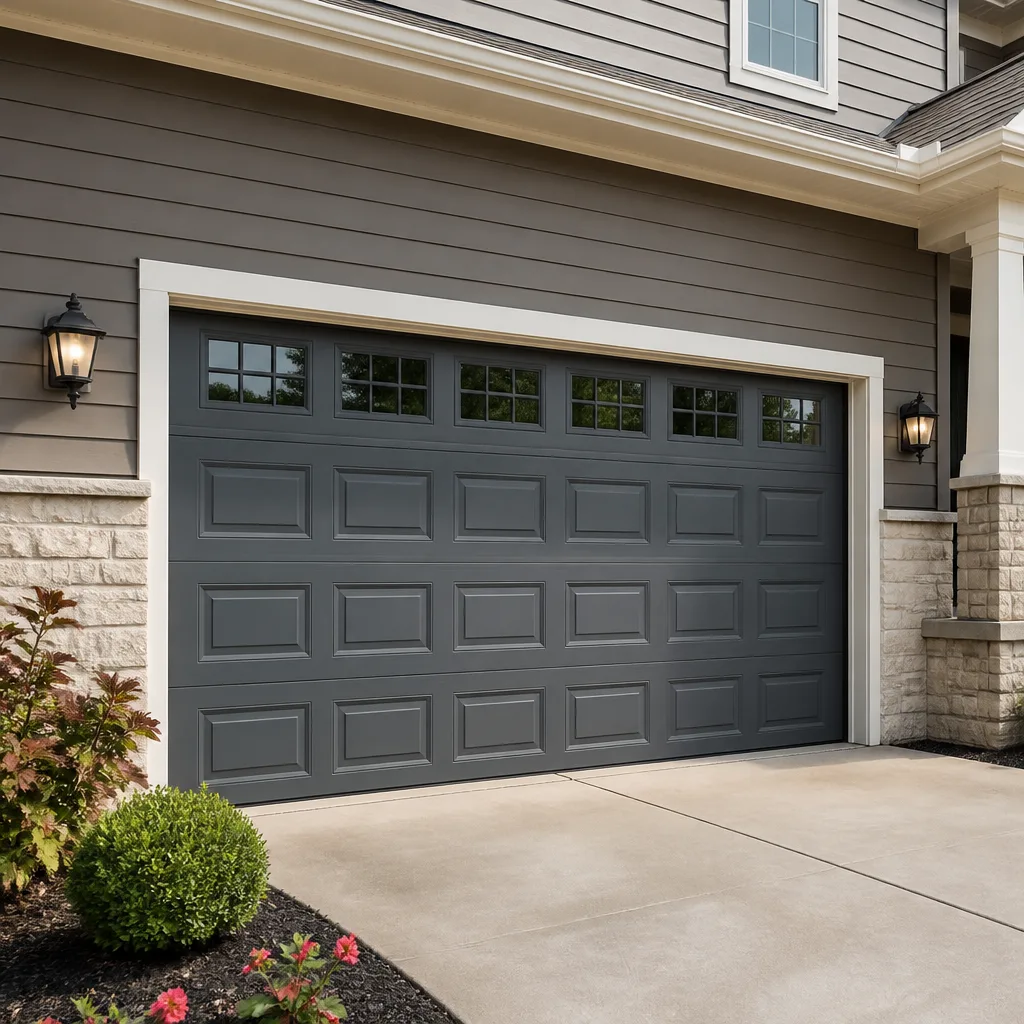 Raised-panel steel
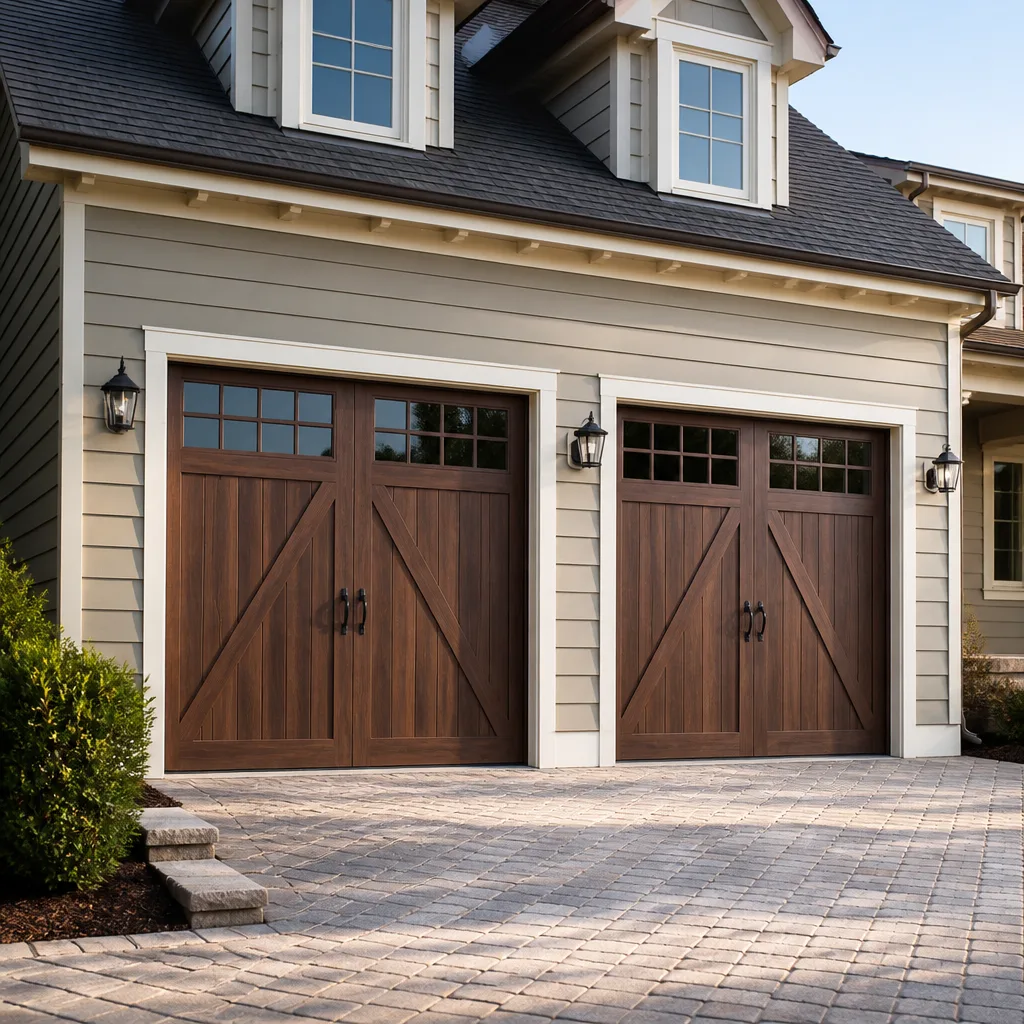 Carriage house
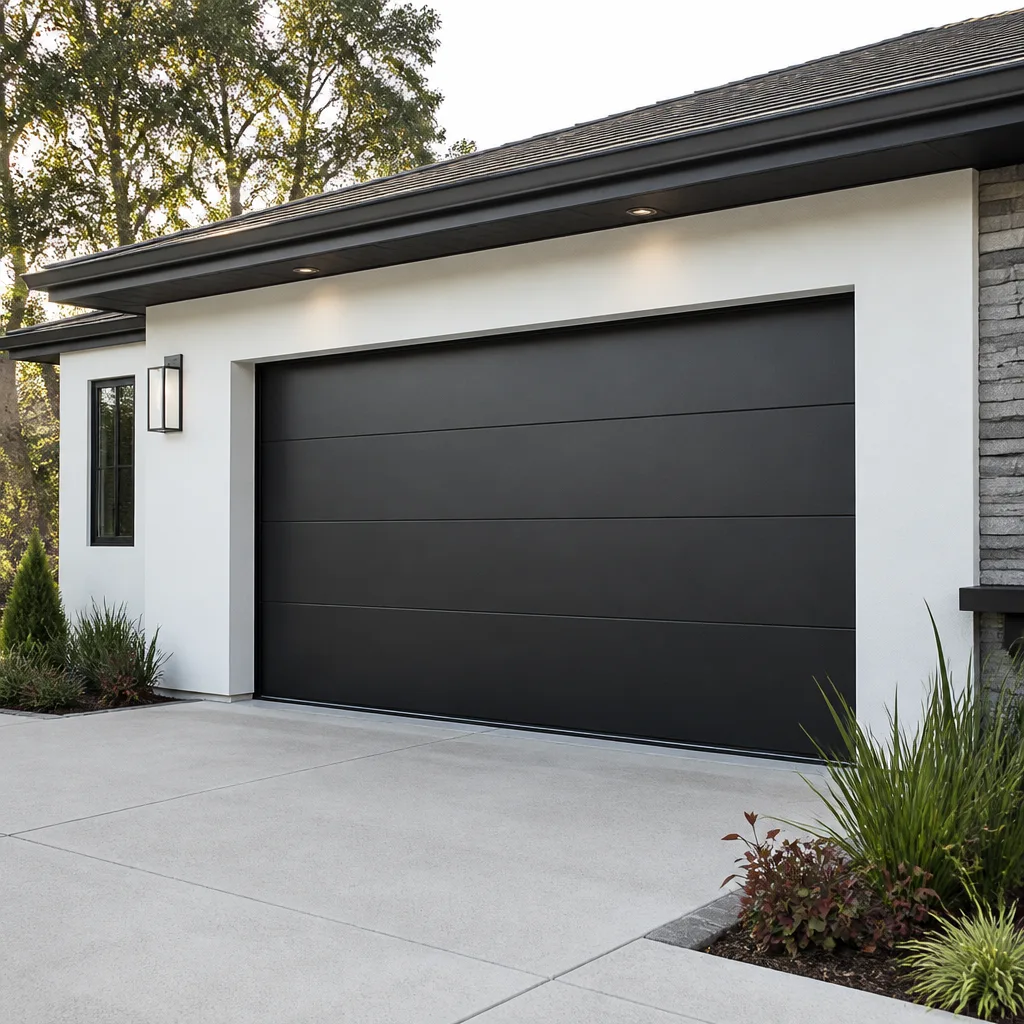 Modern flush
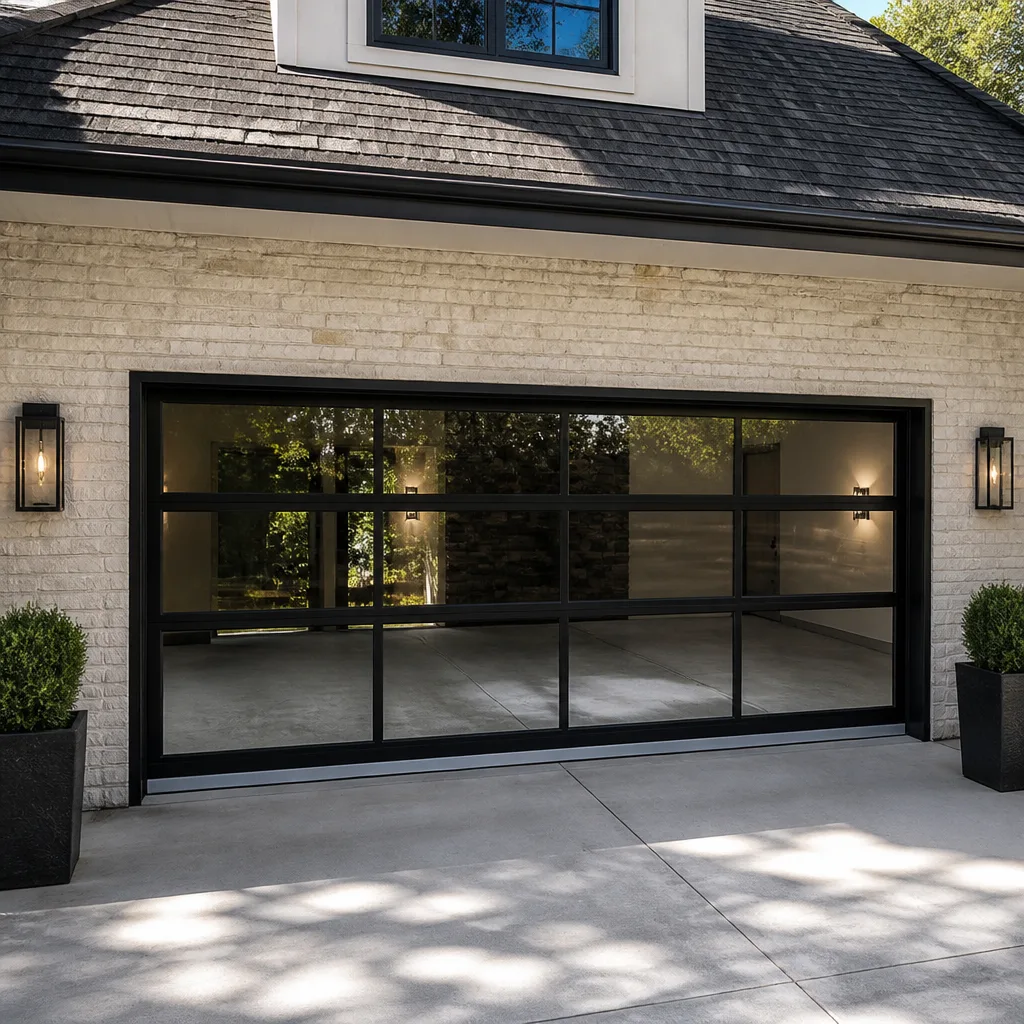 Full-view glass
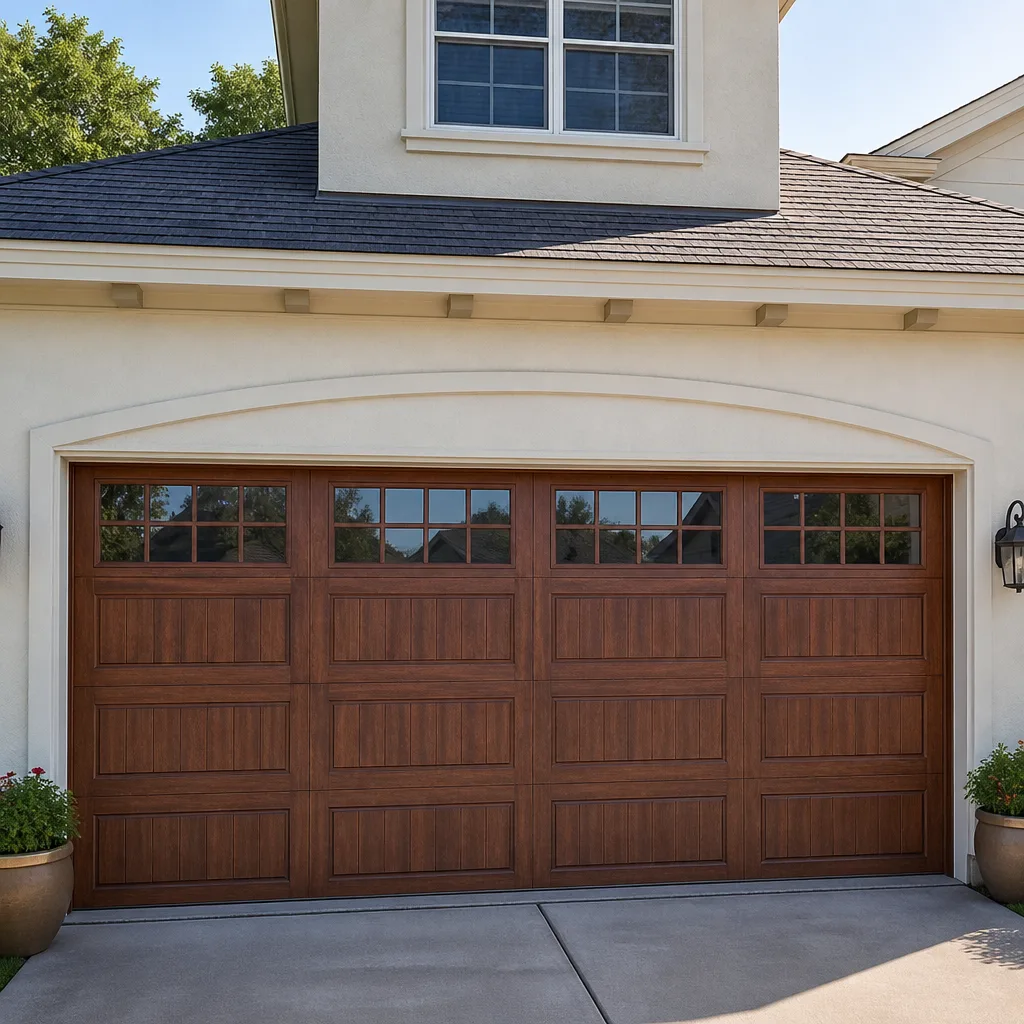 LiftMaster openers
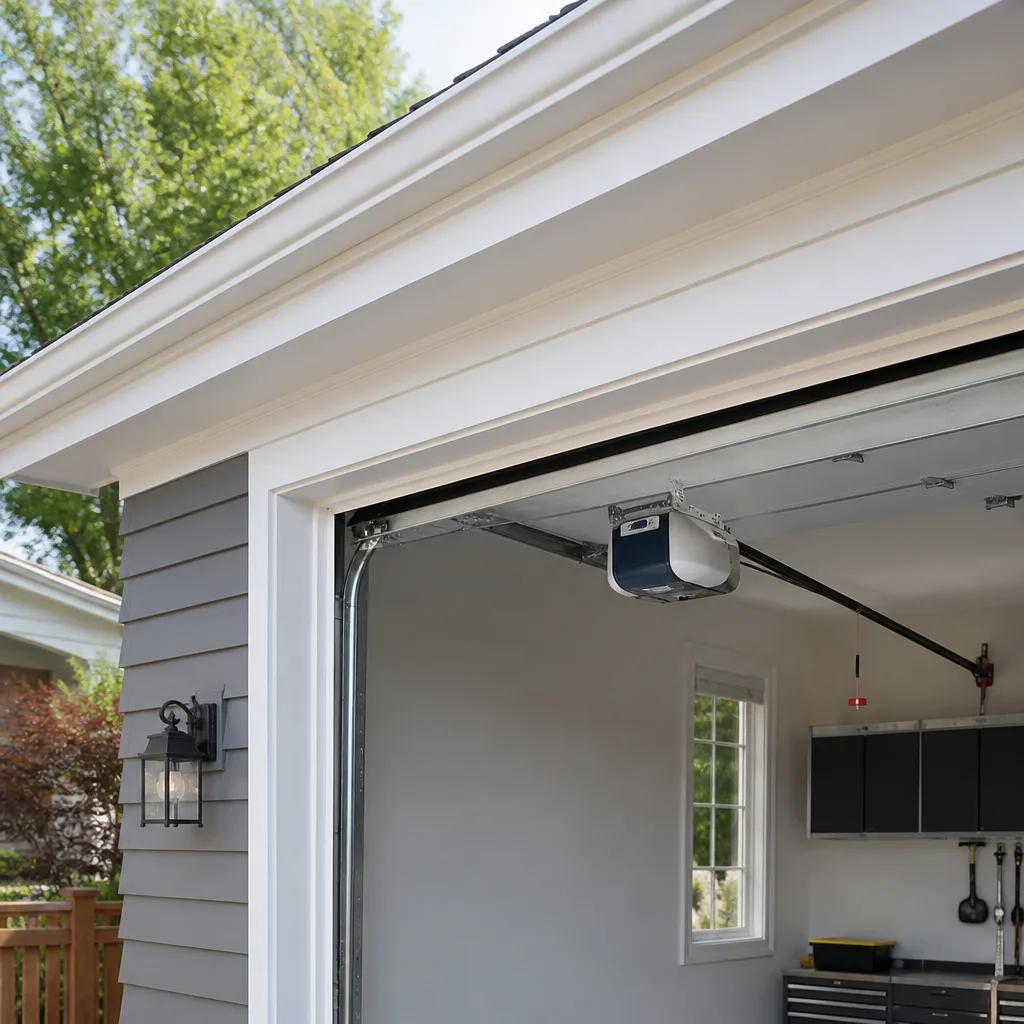 Chamberlain openers
Full 25-point door and opener safety check with every visit - springs, cables, rollers, tracks, and your LiftMaster or Chamberlain opener included
You get a price before we start. It does not change when the truck arrives.
Get your free estimateGarage Door Permits, Codes & Inspections in CA: What You Need to Know
Here’s the counterintuitive truth most Menifee homeowners discover too late: a garage door replacement that includes a new opener, new springs, and structural header modification is three separate work categories under California building code, and only one of them is universally permit-exempt. Get the classification wrong and you’re not just risking a fine. You’re creating a title defect that resurfaces when you sell the house, an insurance exclusion if something fails, and a disclosure headache that no seller wants to explain to a buyer’s agent. This guide walks through exactly what triggers a permit in Riverside County, what doesn’t, what inspectors actually check, and how to handle the process without losing weeks to paperwork. For more guides & resources, see our full blog.
Quick Answer
In California, a like-for-like garage door replacement (same size, same opening, no structural changes) generally does not require a building permit, but any modification to the header, new electrical rough-in for an opener, or conversion of the opening does. Riverside County enforces this through its Planning & Development department, and Menifee residents pull permits through the county. When in doubt, call the building department before cutting anything.
Styles & brands we work with
- Raised-panel steel
- Carriage house
- Modern flush
- Full-view glass
- LiftMaster openers
- Chamberlain openers
Table of Contents
- What Actually Triggers a Garage Door Permit in Riverside County
- What Does NOT Need a Permit
- How California’s Title 24 Energy Code Affects Your Garage Door
- The UL 325 Safety Standard: What Inspectors Check on Openers
- What Unpermitted Work Does to Insurance and Resale
- How to Pull a Garage Door Permit in Menifee: Step by Step
- What the Inspector Looks For: A Field Checklist
- When a Professional Makes Sense
What Actually Triggers a Garage Door Permit in Riverside County
Riverside County draws the permit line based on what changes, not on what you’re installing. The county’s building code enforcement follows California Building Code (CBC) Chapter 1, which requires a permit for any work that alters the structure, changes the size of an opening, or modifies electrical, mechanical, or plumbing systems.
Here’s the practical translation for garage doors:
- Structural header changes: If you’re widening the opening, raising the header, or installing a beam to support a heavier door, that’s structural work. Permit required, no exceptions. This is the one that most often catches homeowners who want to convert a single-car opening to a double.
- New rough-in electrical for an opener: If there’s no existing outlet for a garage door opener and you’re running new wire from the panel, that’s an electrical permit. If an outlet already exists where the opener will mount, plugging into it is a repair, not new work.
- Converting a garage to living space: If the door is coming out entirely and the opening is being framed and finished as a wall, that’s a change of use and a full building permit with plans.
- Replacing rotted or damaged structural framing around the door: If the jamb or header has dry rot and you’re replacing load-bearing lumber, the county treats it as structural repair. Permit required.
In Menifee specifically, older homes in the Sun City and Quail Valley areas built in the 1970s and 1980s sometimes have non-standard openings that predate current code. If your opening measures 7 feet tall but you want a modern 8-foot door, you’re cutting into the header. That’s a permit situation, and it’s the kind of modification we’ve seen homeowners attempt on a Saturday only to discover the beam above the opening is load-bearing.
What Does NOT Need a Permit
The California Building Code and Riverside County both treat like-for-like replacement as exempt from permitting. This is the most common garage door scenario in Menifee: a worn-out door or opener being swapped for a new unit in the same opening, with no structural changes and no new electrical runs.
Specifically exempt:
- Replacing a garage door panel-by-panel or as a complete unit in the same opening, same width, same height, without touching the header or jambs.
- Replacing springs, cables, rollers, hinges, tracks, or weatherstripping on an existing door. These are maintenance items and do not require any permit in California.
- Swapping a garage door opener when an existing grounded outlet is already present in the ceiling or wall near the opener location.
- Replacing the photo-eye safety sensors or the wall control button on an existing opener.
- Installing a new opener on a new door when both are going into an existing opening with existing power. This is treated as appliance installation, not new construction.
One distinction worth spelling out: the door itself rarely triggers a permit. The opening triggers the permit. If your Menifee home has a standard 16-foot by 7-foot opening and you’re putting in a new Clopay or Amarr door that fits that opening, Riverside County does not want paperwork from you. If you’re modifying the opening to fit a door it was never designed for, the county does.
How California’s Title 24 Energy Code Affects Your Garage Door
California’s Title 24 energy code (Part 6 of the California Code of Regulations) has specific requirements for garage doors, but only in certain configurations. Most Menifee homeowners don’t realize the code exists until they try to permit a garage conversion or build an addition above the garage.
Here’s what Title 24 actually governs:
- Conditioned space above the garage: If you have a bonus room, bedroom, or finished attic above the garage, the garage ceiling and the door assembly become part of the thermal envelope. In this case, the garage door must meet a minimum insulation requirement (typically R-4 to R-6 depending on the climate zone), and the installer must document it.
- Unconditioned garages with no living space above: Title 24 does not impose insulation requirements on the door itself. A standard non-insulated steel door is code-compliant.
- Attached garages with conditioned air leakage: The code limits how much air can move between the garage and the house. This affects the sealing around the door perimeter and the weatherstripping at the bottom. Inspectors check this on new construction, not on like-for-like replacements.
Menifee sits in a hot, dry climate zone where summer attic temperatures above a garage routinely hit 140 degrees Fahrenheit. If you’re installing a new door on a home with a room above the garage, an insulated door isn’t just a code consideration. It’s the difference between a usable room and a convection oven from June through September. Wayne Dalton and Clopay both make insulated doors in the R-6 to R-9 range that satisfy Title 24 in Riverside County’s climate zone while keeping the upstairs livable.
The UL 325 Safety Standard: What Inspectors Check on Openers
Every garage door opener installed in California must comply with UL 325, the safety standard that governs automatic gate and door operators. This is federal law, not a California quirk, and it’s the primary thing a building inspector verifies when an opener installation falls under a permit.
UL 325 compliance means the opener must include:
- Photo-eye sensors: Mounted no higher than 6 inches above the floor on each side of the door opening, wired so the door reverses if the beam is interrupted. This is the most common inspection failure we see: sensors mounted too high, or sensors bypassed entirely by a previous homeowner.
- Auto-reverse mechanism: The opener must reverse within 2 seconds of encountering resistance. Inspectors test this with a 2×4 laid flat under the door during new construction inspections.
- Manual release: A red emergency release cord must be accessible and functional, allowing anyone trapped inside to open the door by hand.
- Force settings: The opener’s closing force must be set low enough that it reverses before causing injury, but high enough to close reliably. This adjustment is specific to each door’s weight and balance.
What most Menifee homeowners don’t know – one of several garage door warning signs worth watching – is that UL 325 compliance is required even when no permit is pulled. The standard applies to every installation, permitted or not. That’s why a like-for-like opener swap that technically doesn’t need a permit still needs to be done to code. If an unpermitted opener with non-compliant safety sensors injures someone, the homeowner’s liability is the same as if the work had been permitted and failed inspection.
This is also where brand matters more than most people assume. A Genie opener from the 1990s wired without photo-eyes cannot be brought into compliance by adding the sensors as an afterthought. The control board doesn’t support them. If your Menifee home still has a pre-1993 opener that predates the UL 325 mandate, replacement is the only compliant option. The Garage Door Opener Repair in Menifee guide covers how to assess whether an older opener is worth repairing or should be replaced outright.
What Unpermitted Work Does to Insurance and Resale
Unpermitted garage door work rarely causes a problem on a Tuesday afternoon. It causes a problem at 4:45 p.m. on a Friday, when you’re sitting at the escrow table and the title officer asks whether all improvements were made with permits.
Here’s how unpermitted garage door modifications actually play out:
- Insurance claims: If a garage door fails, a spring breaks, or an opener malfunctions and causes property damage or injury, the insurance adjuster’s first question is whether the work was permitted. An unpermitted structural modification to the header gives the insurer a reason to deny the claim, not because the modification caused the failure, but because it voids the policy’s implicit warranty that the structure was built to code.
- Title transfer: California’s seller disclosure requirements (Civ. Code 1102) require you to disclose unpermitted work, including garage door structural changes. Buyers routinely use this as a negotiating lever, and some lenders will refuse to fund a purchase with known unpermitted structural modifications until the work is retroactively permitted, which costs more than the original permit would have.
- Retroactive permitting: Riverside County does allow retroactive permits for some work, but structural modifications require an engineer’s letter confirming the work meets current code. That letter typically costs more than the original permit, and the county can require opening up finished surfaces to verify the work.
- Appraisal impact: Unpermitted square footage, including a converted garage, is excluded from the appraised living area. You spent $30,000 converting a garage to a bedroom; the appraiser counts it as garage space, and the buyer’s loan falls through.
The cheapest permit in the entire process is the one you pull before the work starts. In Menifee, a simple electrical permit for an opener circuit costs less than a family dinner out, and it eliminates every problem listed above. The Garage Door Installation in Menifee page explains what a permitted installation actually involves and how it protects the value of your home.
How to Pull a Garage Door Permit in Menifee: Step by Step
Menifee does not have its own building department. Permits are issued through Riverside County Planning & Development, either online through the PlusGov portal or in person at the county office. Here’s the process for a garage door permit that involves structural or electrical work:
- Determine the permit type: Structural header changes require a building permit. New opener electrical rough-in requires an electrical permit. Some jobs need both. The county’s online portal lets you select the work type and will route the application correctly.
- Gather the required documents: For structural work, you’ll need a dimensioned drawing of the opening showing the existing header, the proposed header, and the door size. For simple electrical work, no plan is typically required for a single circuit.
- Submit through PlusGov: Create an account on the Riverside County PlusGov portal, fill out the application, upload the drawings, and pay the fee. Typical turnaround for simple garage door permits in the Menifee area runs 3 to 10 business days. Complex structural jobs with plan review can take 2 to 4 weeks.
- Schedule the inspection: After the work is done, call or use the portal to schedule an inspection. The county inspector will verify the header, the door operation, the safety sensors, and the electrical work if applicable. Inspections in the Menifee area are typically scheduled within a few days of the request.
- Keep the finaled permit: When the inspector signs off, you get a finaled permit that lives with the house. Put it in the same file as your title documents. It’s the single piece of paper that ends every future question about the work.
One note for Menifee homeowners in newer developments like Audie Murphy Ranch or Menifee Lakes: HOA approval is separate from county permits and often takes longer. Some HOAs require architectural committee review before any exterior modification, including a garage door that changes the color or material. Plan for both processes if you’re in an HOA-governed community.
What the Inspector Looks For: A Field Checklist
If your garage door job does require an inspection, here’s what the Riverside County inspector will verify, in the order they typically check it:
- Header and structural integrity: The beam above the opening must be sized correctly for the span and the load. For a 16-foot opening, that usually means an engineered beam or a double 2×12 depending on the roof load. The inspector will look for proper bearing at each end and adequate fastening.
- Door balance: A properly balanced door can be lifted by hand with 8 to 10 pounds of force and stays in place when opened halfway. If the door slams or drifts, the springs are wrong for the door weight and the inspector will flag it.
- Safety sensor placement and function: Photo-eyes at 6 inches or less above the floor, wired correctly, and reversing the door when the beam is broken. The inspector tests this with an object in the door’s path.
- Auto-reverse force: The door must reverse when it hits resistance. The inspector tests this with a 2×4 on the ground under the closing door.
- Electrical grounding: The opener outlet must be grounded and GFCI-protected if it’s in a location that requires it. New opener circuits in attached garages must comply with the National Electrical Code requirements the county has adopted.
- Weatherstripping and sealing: In attached garages, the inspector verifies that the door seals properly against the floor and jambs to limit air exchange between the garage and living space.
Most failed garage door inspections in Menifee come down to two things covered in our troubleshooting guide: safety sensors mounted too high, and doors that are not balanced because the springs were installed without checking the door’s actual weight. Both are easy to fix on the spot, but they’re easier to get right the first time.
When a Professional Makes Sense
Some garage door work is genuinely DIY-friendly: replacing weatherstripping, painting a steel door, swapping out a wall button. But when the work crosses into structural or electrical territory, or when you’re dealing with high-tension springs, the math changes. Torsion springs under load carry enough stored energy to cause serious injury or death if they release unexpectedly. A structural header modification done wrong doesn’t just fail an inspection. It can fail under load and drop a 300-pound door onto whatever is underneath it.
High-tension springs, cables, and header modifications are not DIY projects. A trained garage door professional is the right call for these, and we recommend following a Garage Door Repair Maintenance Checklist for Menifee Homeowners with someone who works on garage doors specifically, not a general handyman. Garage Door Service Menifee works on the brand you already own, whether that’s a Clopay, Amarr, Wayne Dalton, or another major manufacturer. Garage doors are all we do. For a free estimate in Menifee, call (833) 593-4019. We’ll tell you honestly whether your job needs a permit, and whether repair or replacement actually makes sense. Repair or replace – we’ll tell you which one actually makes sense.
See the difference
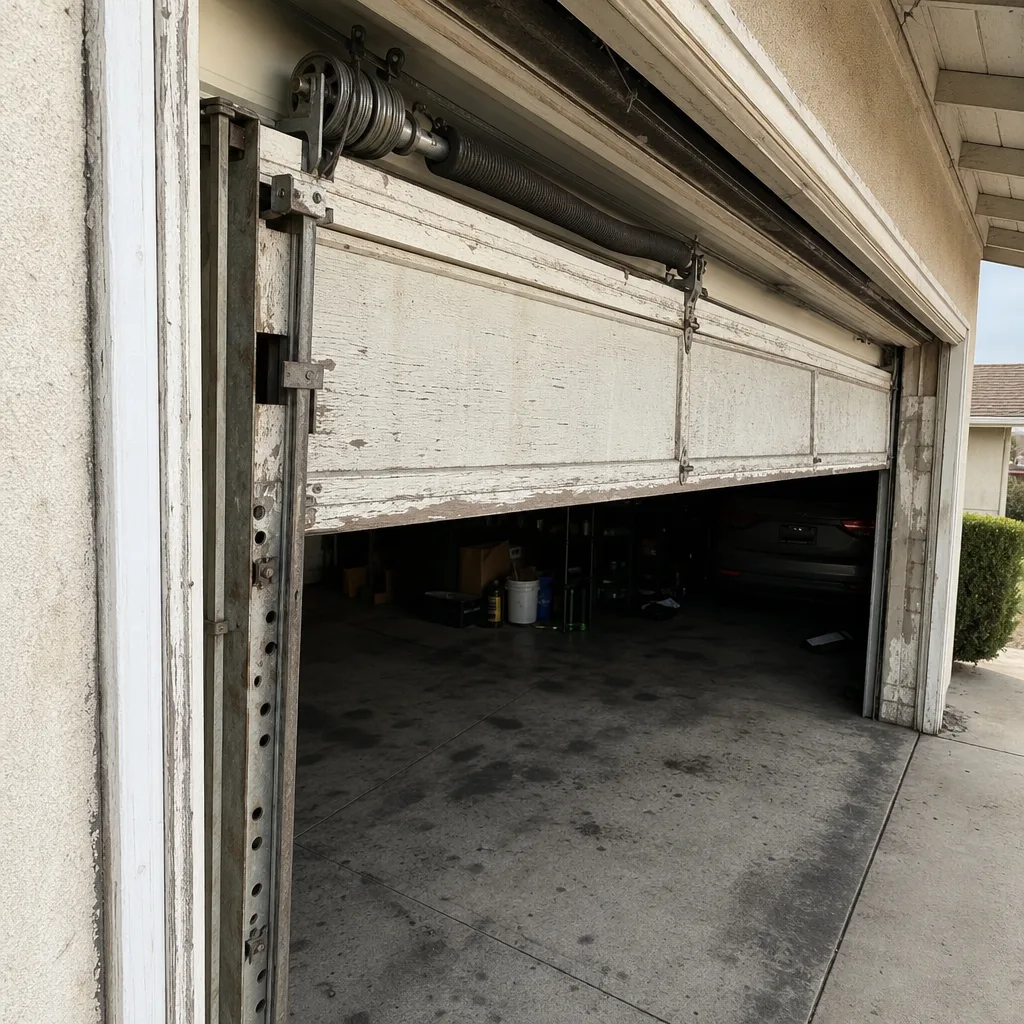 Before
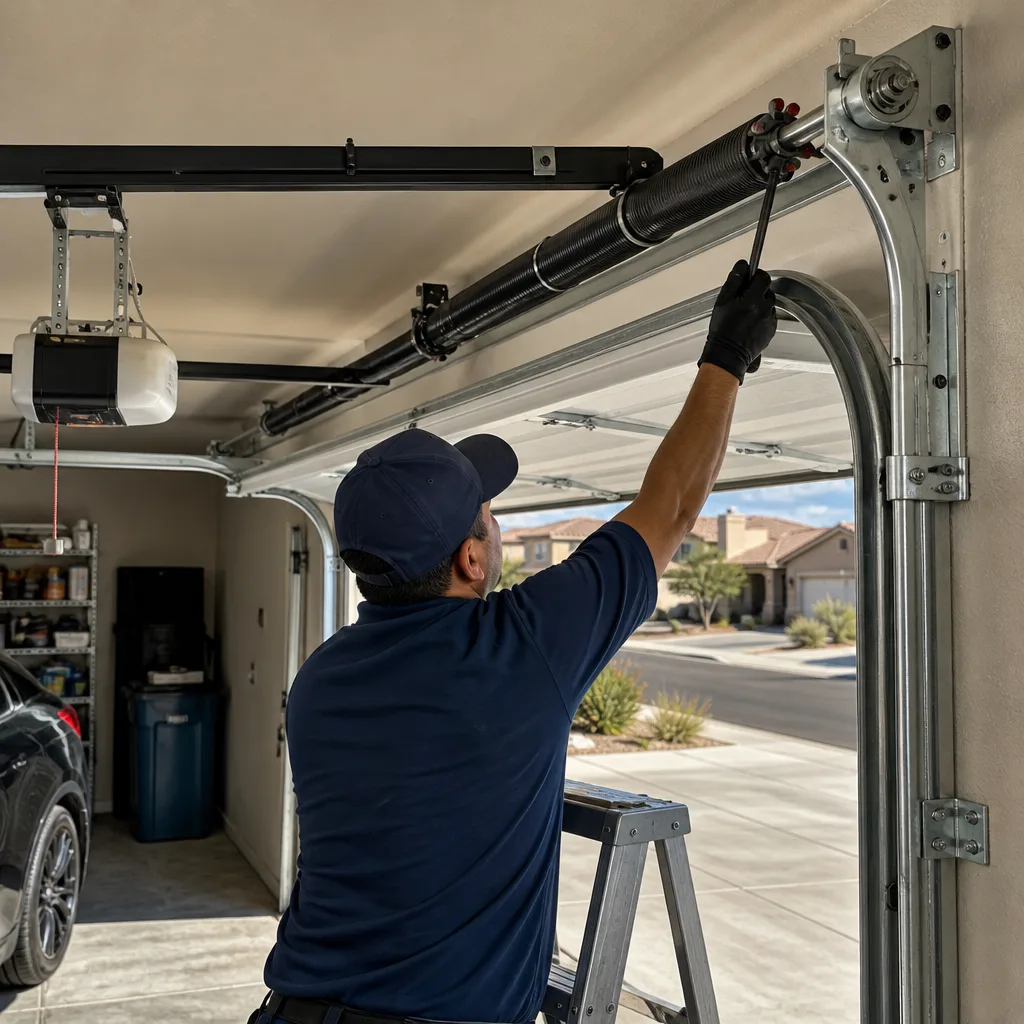 After
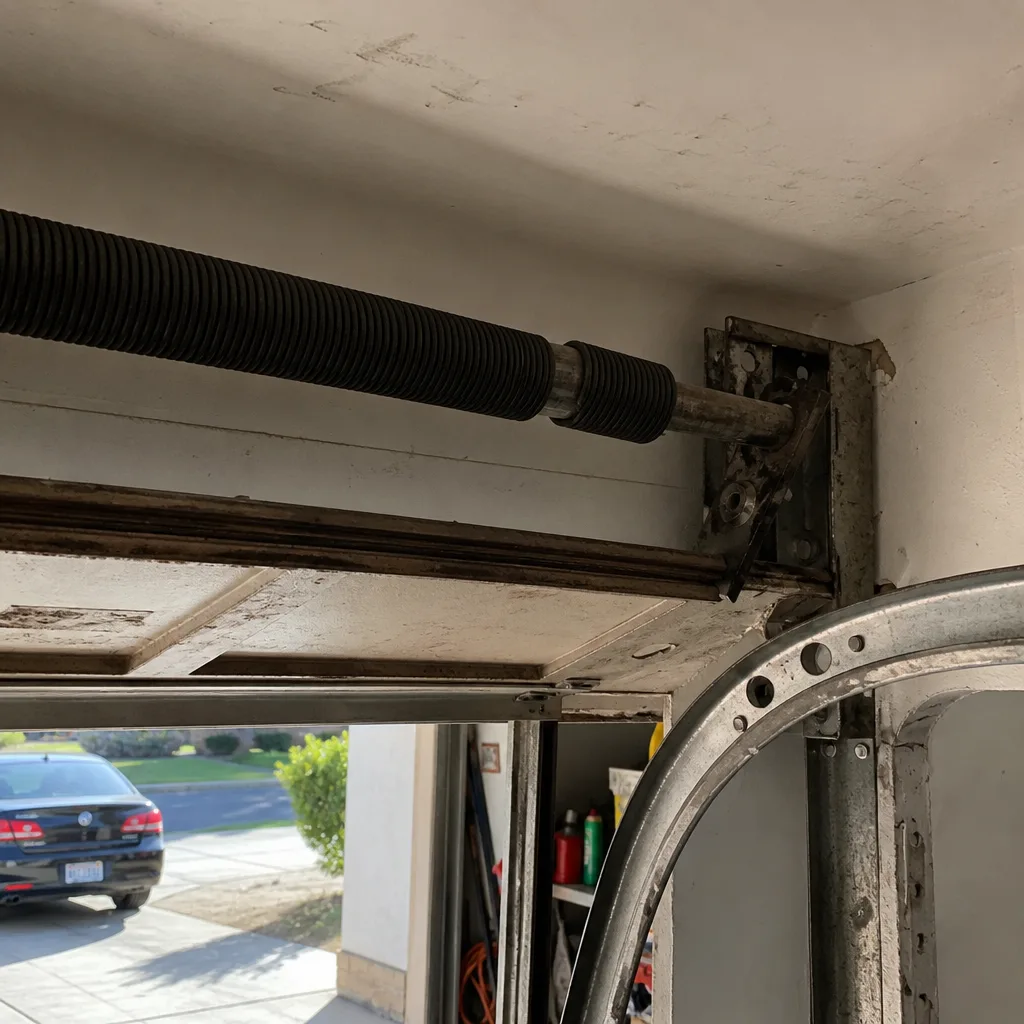 Before
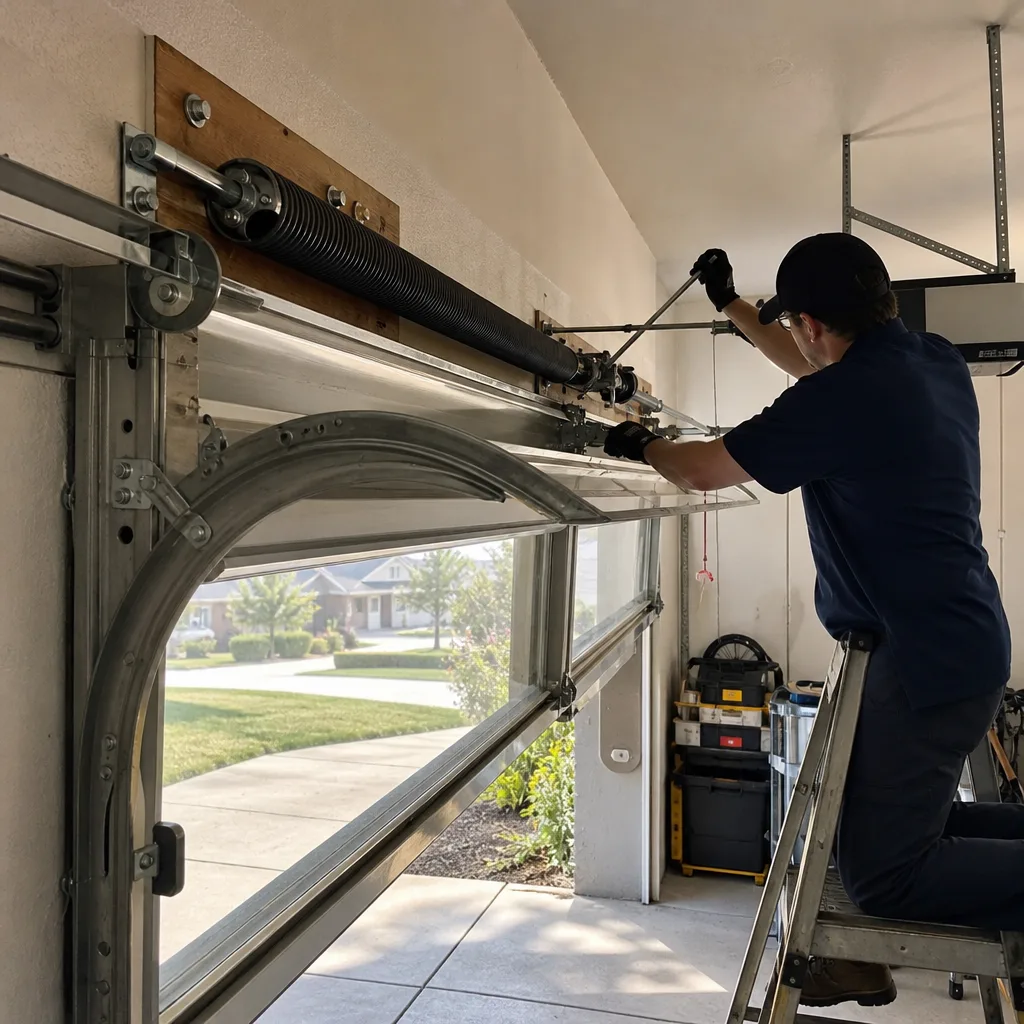 After
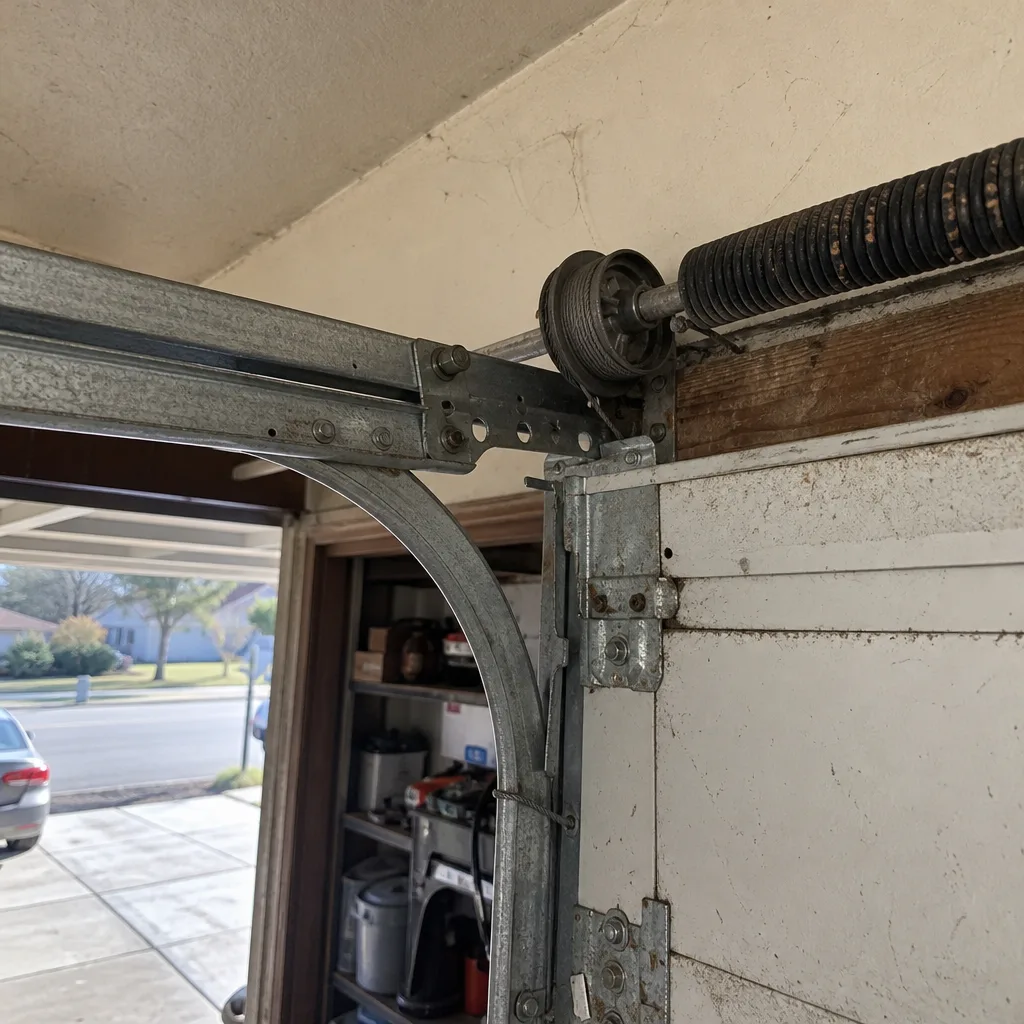 Before
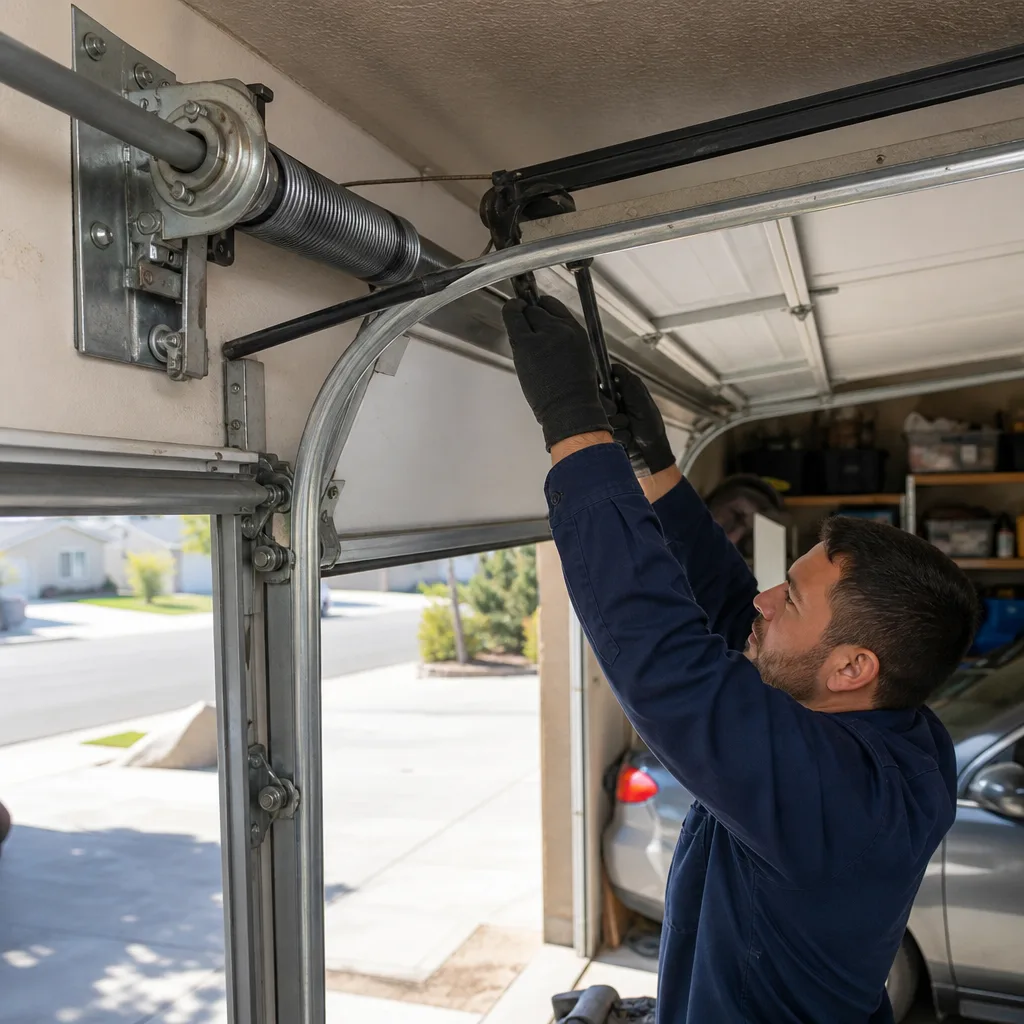 After
Common Mistakes to Avoid
- Assuming all garage door work is permit-free. Like-for-like replacement is exempt. Structural changes to the header or opening are not. Get the classification wrong and you’ve created a title defect, not just a code violation.
- Bypassing or disabling the UL 325 safety sensors. Homeowners do this when the sensors get misaligned and the door won’t close. It’s dangerous, it violates federal safety law, and it’s the first thing an inspector will catch.
- Widening an opening without checking what’s above it. In Menifee homes built with truss roofs, the member above the garage door often looks like part of the framing but is actually a structural beam carrying roof load. Cutting it without an engineer’s review is the most expensive mistake in this entire guide.
- Pulling a permit and then skipping the inspection. An unfinaled permit is almost as bad as no permit. The work is still flagged in county records as incomplete, and the title issue remains.
- Ignoring HOA requirements in Menifee’s master-planned communities. County permits and HOA approval are separate processes. Many Menifee HOAs have their own garage door appearance rules that the county doesn’t care about but the HOA will enforce with fines.
- Installing a non-insulated door on a house with a room above the garage. Title 24 requires insulation on conditioned-space installations. Even if the inspector misses it the first time, the energy bill and the summer heat won’t.
- Replacing a pre-1993 opener without upgrading to UL 325 compliance. Old openers without photo-eyes cannot be made safe with add-on parts. Replacement is the only route to compliance.
Frequently Asked Questions
No, if you’re replacing a garage door with a new door of the same size in the same opening with no structural changes. Riverside County treats like-for-like door replacement as exempt from permitting. If you’re changing the opening size, modifying the header, or running new electrical for an opener, you do need a permit. Call (833) 593-4019 if you’re unsure which category your job falls into.
A simple electrical permit for a garage door opener circuit typically runs in the $50 to $150 range depending on the scope. Structural permits requiring plan review cost more, often $300 to $800 depending on the complexity of the header modification. The county’s PlusGov portal shows exact fees when you submit the application.
Yes, if there’s an existing grounded outlet where the opener will mount and the installation complies with UL 325 safety standards, including photo-eye sensors and auto-reverse. No permit is required to plug an opener into an existing circuit. If new wiring must be run from the panel, an electrical permit is required.
California law requires you to disclose unpermitted work to buyers on the Transfer Disclosure Statement. Buyers may demand a price reduction, lenders may refuse financing on structural changes, and retroactive permitting will cost more than the original permit would have. The cleanest path is to permit before you sell, or to only do work that doesn’t require a permit.
Simple electrical permits through Riverside County’s PlusGov portal typically take 3 to 10 business days. Structural permits with plan review can take 2 to 4 weeks. Inspections can usually be scheduled within a few days of the request after the work is complete.
Yes. UL 325 is a federal product safety standard that applies to every automatic garage door opener installation in the United States, permitted or not. An unpermitted opener that doesn’t meet UL 325 creates the same safety and liability exposure as a permitted one that failed inspection.
Yes. Many Menifee master-planned communities, including neighborhoods in Menifee Lakes and Audie Murphy Ranch, have architectural review committees with their own garage door rules covering color, material, and design. HOA approval is separate from Riverside County permitting, and both are required if your HOA has a review process.
The Bottom Line
Garage door permits in California come down to a single question: are you changing the opening or the electrical, or are you swapping components in place? Like-for-like replacement of the door, springs, tracks, and opener plugged into an existing outlet keeps you firmly in permit-free territory. Structural header changes, opening modifications, and new electrical rough-in trigger the Riverside County permit process, and ignoring it creates a chain of problems from insurance to resale that no homeowner wants to own later. If you’re unsure where your Menifee garage door job falls, the county building department will tell you, or you can ask a professional who works on these systems daily. For help with any garage door, opener, or installation question in Menifee, the Garage Door Service Menifee home page has more on our service area and approach, or call us directly at (833) 593-4019.
Written by the team at Garage Door Service Menifee, serving Menifee since 2012.