
Last updated November 2, 2026
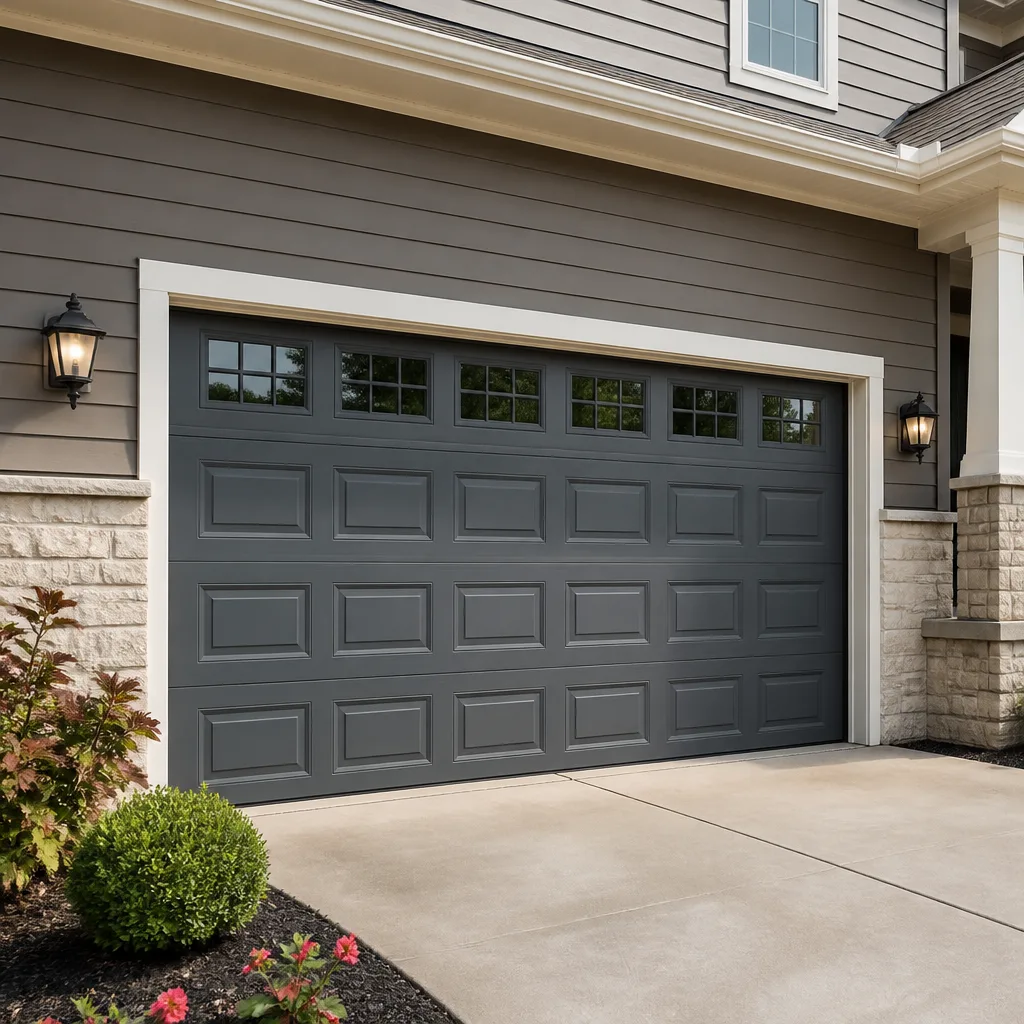 Raised-panel steel
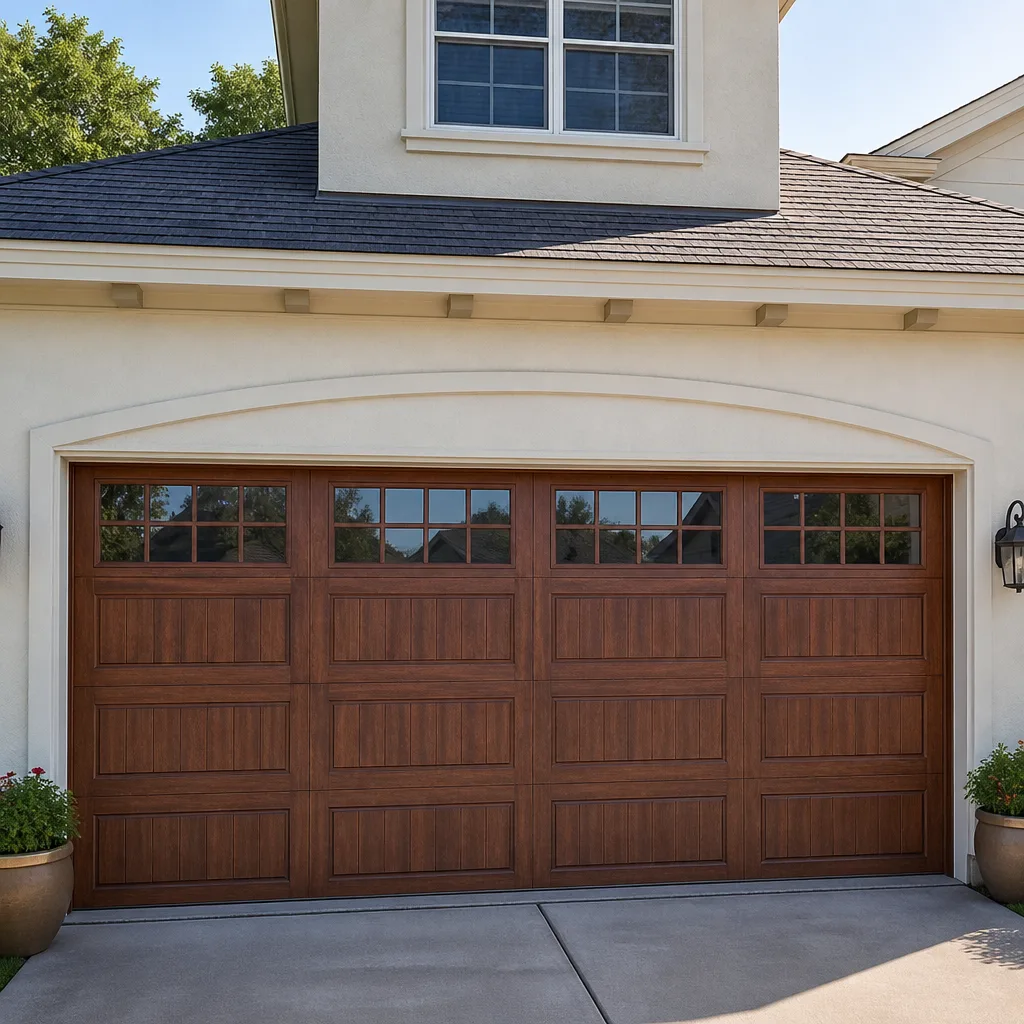
 Carriage house
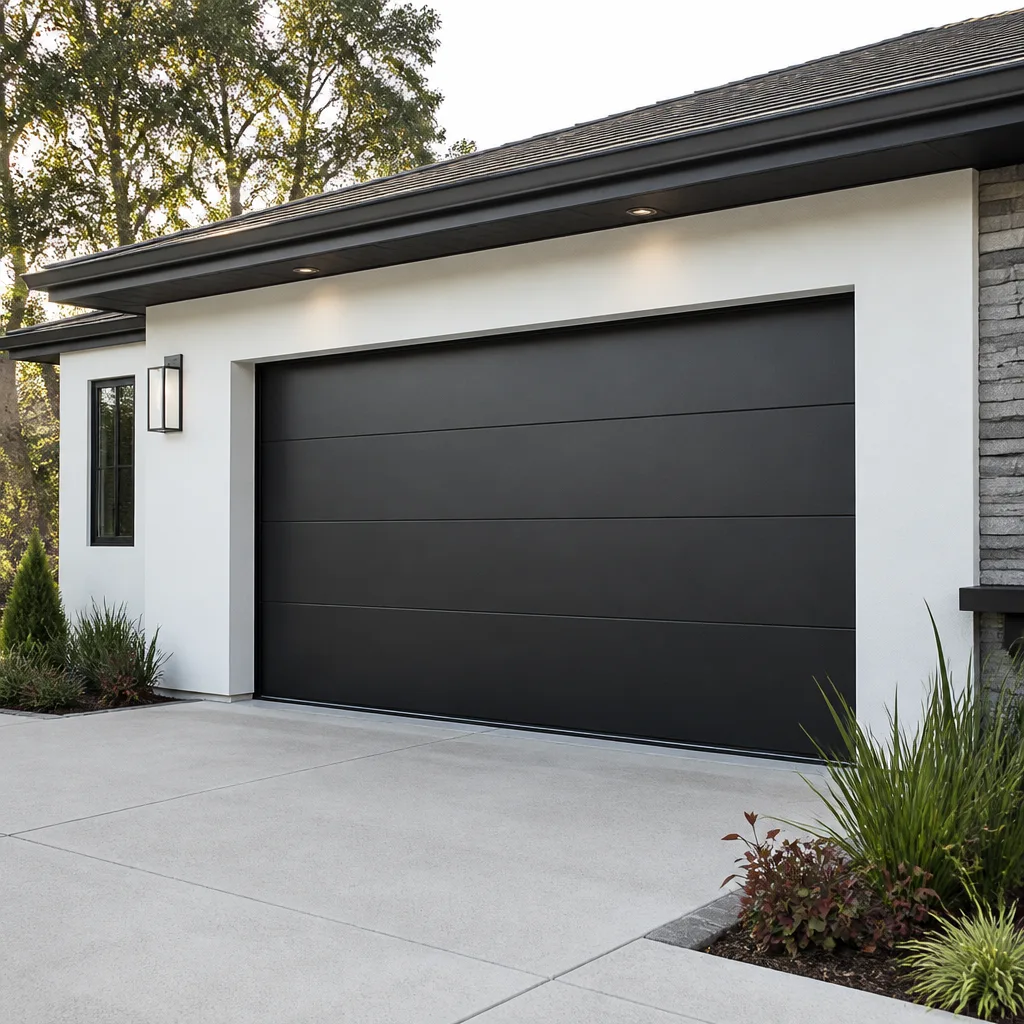 Modern flush
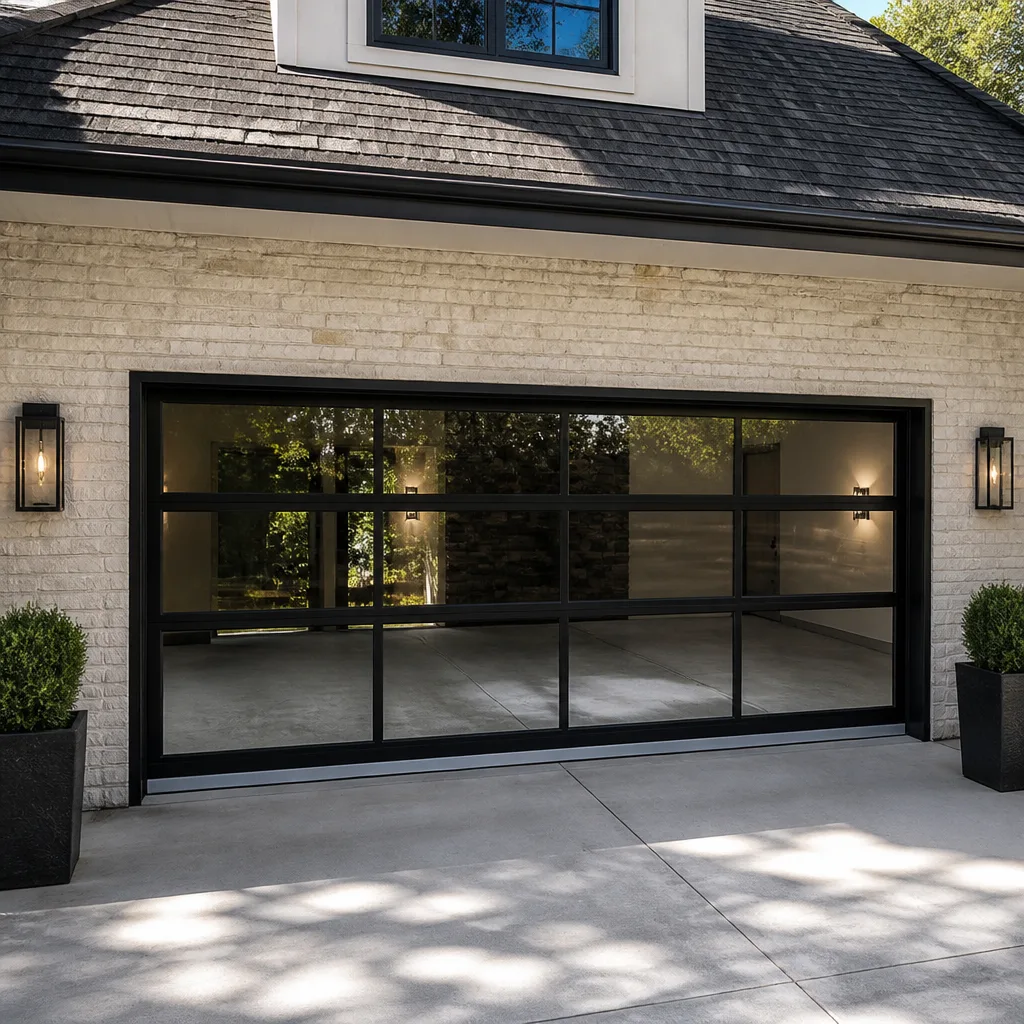 Full-view glass
 LiftMaster openers
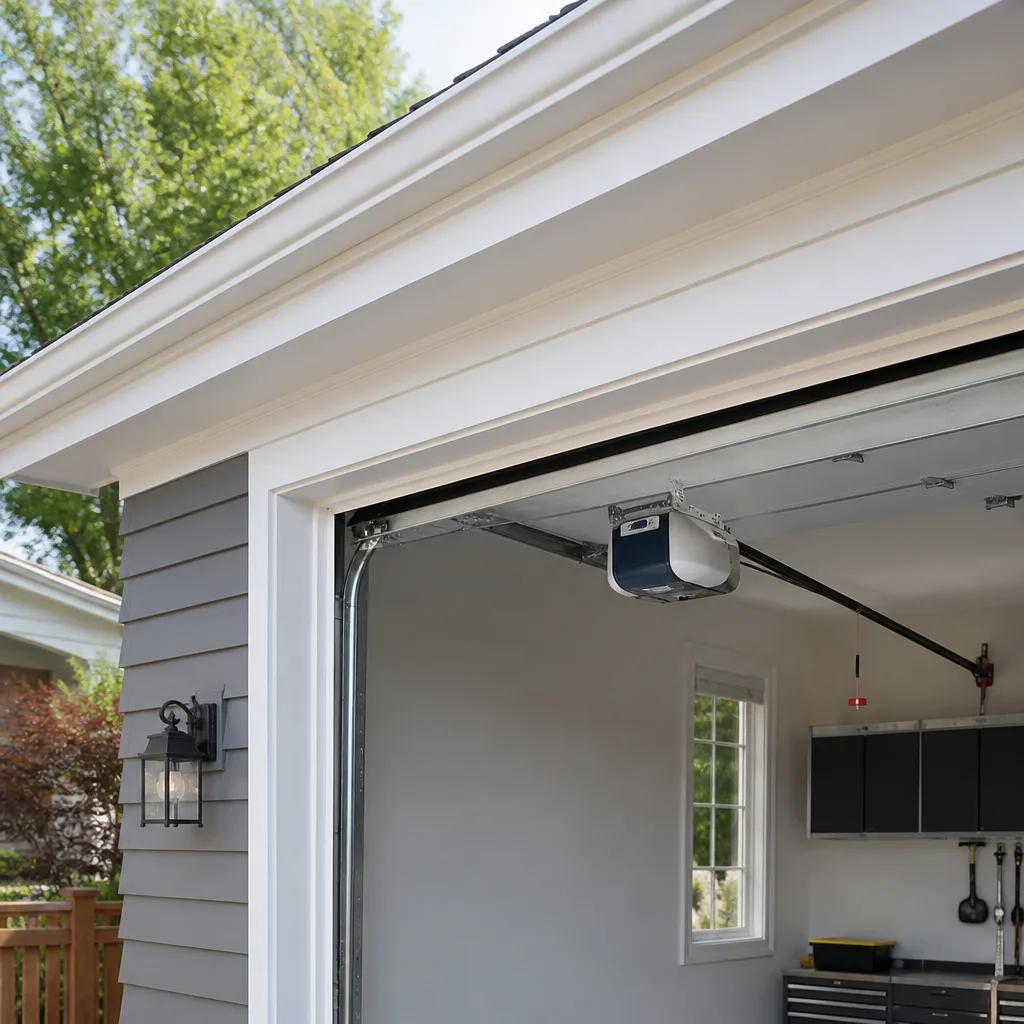 Chamberlain openers
Full 25-point door and opener safety check with every visit - springs, cables, rollers, tracks, and your LiftMaster or Chamberlain opener included
You get a price before we start. It does not change when the truck arrives.
Get your free estimateGarage Door Repair Maintenance Checklist for Menifee Homeowners
Garage door lubricant breaks down faster at sustained temperatures above 95°F. Menifee averages more than 60 days a year above that threshold, which means a standard “lube it once a year” schedule leaves your hardware running dry for months at a time. We wrote this checklist because most generic maintenance guides ignore what actually happens to garage doors in southwest Riverside County: extreme heat cycling, Santa Ana wind gusts that stress track alignment, and dust intrusion from active grading zones across Menifee’s newer developments. What follows is a maintenance routine built around those conditions, broken down by task, season, and time commitment.
Quick Answer
A Menifee garage door maintenance routine should follow three tiers: a 10-minute monthly visual and functional check, a 30-minute quarterly deep-clean and lubrication using high-temperature-rated products, and a 45-minute pre-Santa Ana wind season prep in September and October. The two most important tasks for this specific climate are lubricating moving parts with a synthetic or lithium-based lubricant rated above 120°F and checking the bottom seal and track alignment before wind events arrive.
Key Takeaways
- Menifee’s heat breaks down standard garage door lubricant in roughly 4 to 6 months, not 12. Use a high-temperature synthetic or white lithium grease rated for extreme heat.
- Santa Ana winds typically hit hardest between October and February. Your pre-wind prep should be done by late September.
- Homes near active construction or grading in Menifee need bottom-seal and track cleaning twice as often as homes in established neighborhoods.
- Monthly visual checks take 10 minutes. Quarterly deep maintenance takes 30 to 45 minutes. Annual professional tune-ups catch what checklists cannot.
- If your opener’s auto-reverse does not respond to the 2×4 test, call a professional immediately. That is a safety issue, not a convenience issue.
Styles & brands we work with
- Raised-panel steel
- Carriage house
- Modern flush
- Full-view glass
- LiftMaster openers
- Chamberlain openers
Table of Contents
- Monthly Garage Door Checks (10 Minutes)
- Quarterly Maintenance for Menifee’s Heat (30-45 Minutes)
- Santa Ana Wind Season Prep: September and October
- Dust Intrusion: What Menifee’s Construction Zones Do to Your Door
- Lubrication Guide: What Works in Inland Empire Heat (and What Turns to Goo)
- Annual Professional Tune-Up: What a Tech Checks That You Cannot
- Common Mistakes to Avoid
- When to Call a Professional
- Frequently Asked Questions
Monthly Garage Door Checks (10 Minutes)
Most garage door failures in Menifee do not happen suddenly. They announce themselves weeks in advance: a slightly louder opener, a door that pauses for a half-second on the way up, a corner that sits a quarter-inch off the ground. The point of a monthly check is to catch those signals before they become a spring replacement or a burned-out motor. We recommend doing this check the first Saturday of every month. It takes less time than a coffee run.
- Watch and listen during a full open-and-close cycle. Stand inside the garage and operate the door once. It should move smoothly with no jerking, hesitation, or grinding. A door that shudders near the top of its travel often has a track alignment issue. A door that hesitates near the bottom may have a binding roller.
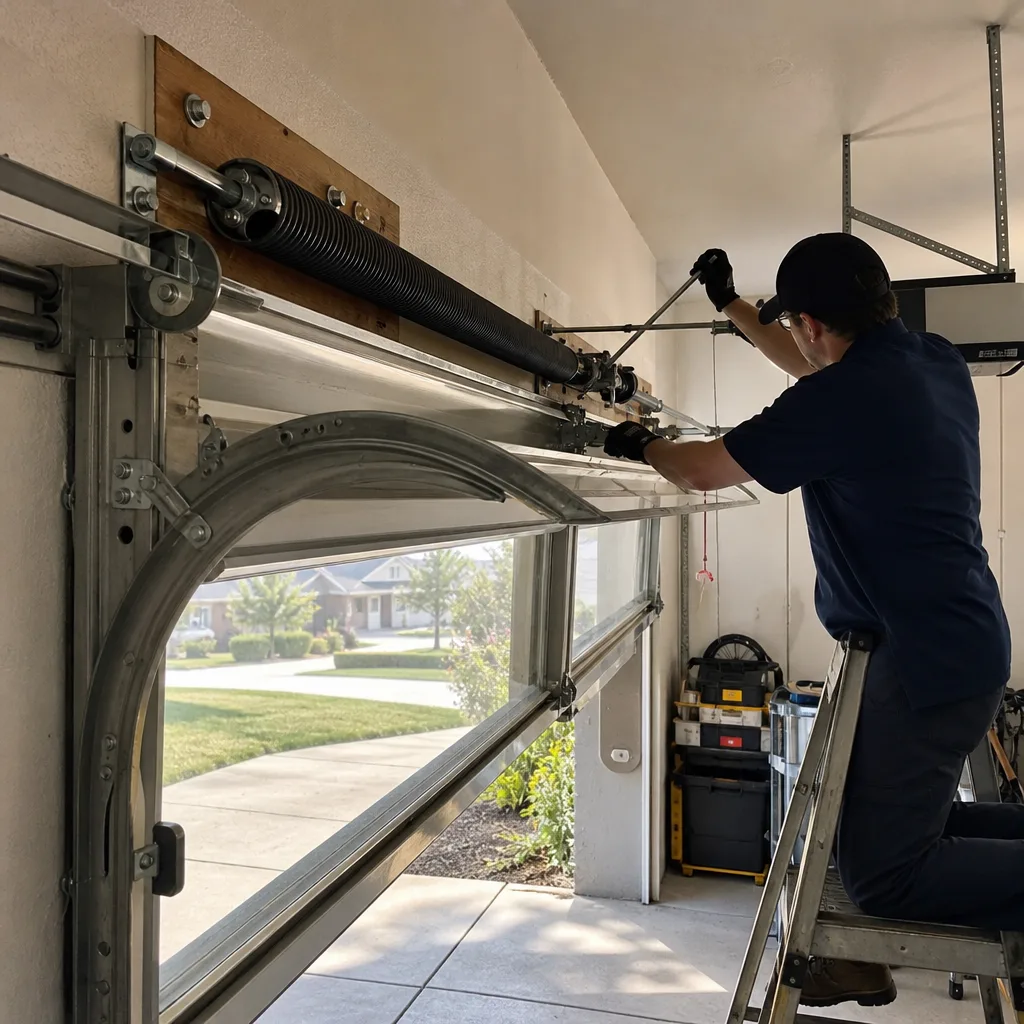
- Check the balance manually. Pull the red emergency release cord and lift the door by hand. It should rise to about waist height and stay there without you holding it. If it drops, your springs are losing tension. If it shoots up, the springs are over-torqued. Both conditions shorten opener lifespan. Do not adjust torsion springs yourself: these are under extreme tension and can cause serious injury or death if mishandled. This is a task for a trained technician.
- Inspect cables for fraying. Look at the cables on both sides of the door near the bottom roller brackets. Run a finger (gently, wearing gloves) along each cable. Any burrs, flat spots, or separated strands mean the cable is near failure. A snapped cable can send a door crashing down.
- Test the auto-reverse sensors. Place a 2×4 flat on the ground under the door’s path and close the door. The door should reverse within two seconds of contacting the board. If it does not, stop using the door and call for garage door repair in Menifee immediately.
- Check the bottom seal for daylight. Close the door and look along the bottom edge from inside the garage. If you see even a sliver of daylight, the bottom seal is cracked or compressed. In Menifee’s heat, rubber seals become brittle in roughly two to three summers. A failed seal lets dust, pests, and 100-degree air into the garage.
Ten minutes once a month prevents roughly 70% of the repairs we get called for in Menifee. The remaining 30% are spring failures, cable breaks, and opener board failures, which no checklist prevents but early detection does make cheaper to fix.
Quarterly Maintenance for Menifee’s Heat (30-45 Minutes)
Quarterly maintenance is where Menifee’s climate demands more than a generic checklist. A standard national guide tells you to lubricate once a year. That advice fails here. Menifee regularly sees summer temperatures above 100°F, and sustained heat above 95°F breaks down petroleum-based lubricants through a process called thermal oxidation. The result is a thick, gummy residue that attracts dust and gums up rollers, hinges, and the opener rail. In our experience, doors in Menifee that are lubricated only once a year are running dry for at least six months of that year.
Here is the quarterly routine we recommend. Schedule it for early morning so you’re not working on a 110-degree door panel.
- Clean the tracks with a dry rag. Wipe the interior of both vertical and horizontal tracks. Do not use grease on tracks. Tracks are designed to guide the rollers, not to be lubricated. Grease in tracks collects dust from Menifee’s grading zones and turns into an abrasive paste that wears roller bearings prematurely.
- Lubricate all moving parts. Apply a high-temperature synthetic or white lithium grease to the hinges, roller bearings, lock mechanism, and torsion spring coil. The product should list a service temperature of at least 120°F. We cover specific products in the lubrication section below.
- Lubricate the opener rail with a dedicated opener lubricant. Chamberlain and LiftMaster both manufacture rail lubricants formulated for their drive systems. A silicone-based spray works for chain drives. Do not use WD-40: it is a solvent, not a lubricant, and it will strip existing lubrication from the rail.
- Check and tighten all hardware. Use a socket set to check the bolts on the track brackets, hinges, and opener mounting points. Menifee’s thermal expansion and contraction cycles loosen hardware faster than coastal climates. A loose hinge allows the door to shift under load, which accelerates track wear.
- Clean the weatherstripping and check the threshold. Wipe the bottom seal with warm water and a mild soap. Inspect for cracks, especially along the outside edges where rubber meets concrete. Menifee’s UV exposure is intense year-round, and UV embrittlement is the primary cause of bottom-seal failure in this area.
- Vacuum the opener head unit. Disconnect the power, remove the cover, and use a soft brush attachment to clear dust from the circuit board and motor housing. Dust acts as an insulator, which increases heat buildup inside the opener unit. In Menifee’s summer, opener head units in garages without ventilation can exceed 120°F internally.
This routine takes about 45 minutes the first time and 30 minutes once you know the door. Set a quarterly reminder for the first weekend of March, June, September, and December.
Santa Ana Wind Season Prep: September and October
Santa Ana winds are a fact of life in Menifee from October through February. These are not breezes. Gusts of 40 to 60 mph are common during high-wind events, and sustained pressure against a 16-foot-wide garage door applies significant lateral force to the tracks, hinges, and spring system. We recommend a dedicated wind-prep inspection in late September, before the first major Santa Ana event of the season.
Here is what to check and why each item matters:
- Bottom seal integrity. During Santa Ana events, wind-driven dust and debris get forced under any gap in the seal. If your garage faces an open field, graded lot, or the foothills on the east side of Menifee, you’re more exposed. Replace any seal that shows cracks longer than an inch or that allows visible daylight through.
- Track alignment under wind load. With the door closed, look at the vertical tracks where they meet the horizontal curve. Wind pressure against a closed door pushes the top section inward, which bends tracks where the curve begins. Look for any gap between the track and the wall bracket, or scoring on the rollers. A door that rattles during wind gusts is a sign the tracks are loosening.
- Opener mount and header bracket. The L-shaped bracket that connects the opener rail to the wall above the door takes tremendous stress during high-wind events. Check for hairline cracks in the bracket and for any looseness in the lag bolts. This bracket fails without warning, and when it does, the opener rail drops onto your vehicle.
- Auto-reverse sensitivity. Wind gusts pressing against the door increase the amperage draw on the opener motor. If the auto-reverse force setting is too high, the opener may not reverse when it should, which creates a serious safety hazard. Run the 2×4 test described in the monthly checks section. If the door does not reverse reliably, call a professional.
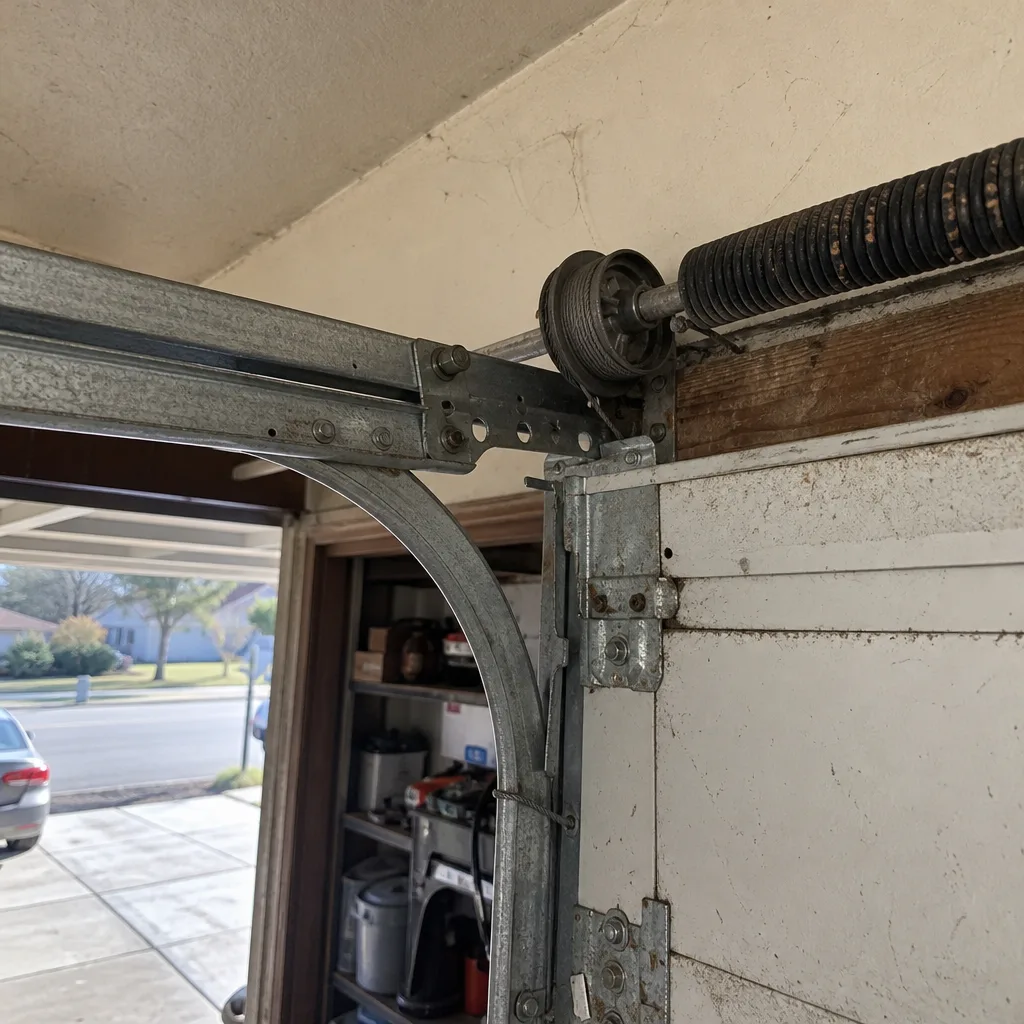
- Spring bracket hardware. Torsion springs twist under load. Wind gusts against the door panel add sudden dynamic load spikes. Check the stationary spring bracket bolts (the center bracket on the wall above the door) for any play. If the bracket shifts at all, it will eventually shear the bolts. Spring replacement and bracket repair are professional jobs: springs under tension store enough energy to cause severe injury.
If you do one wind-prep item and skip the rest, make it the bottom seal and track alignment check. Those two failures account for the majority of post-wind-event repair calls we see in Menifee. For a deeper look at how wind affects door systems, see our guide on garage door repair in Menifee.
Dust Intrusion: What Menifee’s Construction Zones Do to Your Door
Menifee has been one of the fastest-growing cities in Riverside County for over a decade, and that growth means active grading operations, new-home construction, and exposed soil across the city’s eastern and northern development corridors. Homes in areas like Audie Murphy Ranch, Menifee Lakes, and the newer tracts east of the 215 are routinely exposed to airborne dust levels that homes in established neighborhoods near the 74 corridor simply do not experience.
That dust does specific damage to garage door systems:
- Roller bearing wear. Dust particles work their way into the sealed bearings of nylon rollers. Over time, that dust acts as a mild abrasive and accelerates bearing wear. A roller that would last 10 to 12 years in a dust-free environment may fail in 7 to 8 years in a home near active construction. The first sign is a squeaking sound during operation. The second sign is a roller that wobbles in the track.
- Opener rail contamination. A dust-coated garage door rail on a Chamberlain, LiftMaster, Genie, or Craftsman opener reduces the effectiveness of the rail lubricant. The dust absorbs the lubricant, forming a gray sludge that increases friction and shortens gear life. Signs include jerky movement, increased opener noise, and in severe cases, the opener reversing mid-cycle because the obstruction sensor detects the increased resistance.
- Photo eye obstruction. Dust from grading settles on the photo eye lenses near the bottom of the door opening. Even a thin film of dust reduces their effective range and sensitivity. During Santa Ana season, the problem compounds: wind-blown dust coats the lenses within a week of cleaning. Symptom: the opener refuses to close, or reverses for no reason, with the lights blinking.
- Spring corrosion acceleration. Dust alone is not a major corrosion factor, but dust mixed with high humidity (Menifee’s winter mornings often bring 70%+ humidity) creates a fine film that accelerates surface oxidation on torsion springs. Surface rust on a spring is not a failure warning by itself, but it does indicate the spring coating has degraded and the coil is more vulnerable to fatigue cracking.
For homes within a half-mile of active grading or construction, we recommend doubling the frequency of track cleaning and photo eye wiping: every two weeks instead of monthly. If your garage faces an active grading zone, consider a heavier-duty bottom seal. Standard rubber seals compress and crack faster when dust accumulates against them. A double-contact seal designed for high-dust environments will last longer and seal more effectively.
Lubrication Guide: What Works in Inland Empire Heat (and What Turns to Goo)
This is the section where most generic maintenance checklists fail Menifee homeowners. The products available at big-box stores are not all equal in southwest Riverside County’s summer heat. Here is what we know from working on doors across Menifee:
Products we recommend for high-heat environments
- White lithium grease (high-temperature formulation). Look for a product rated for service temperatures of at least 120°F. White lithium provides long-lasting lubrication on hinges, roller bearings (if the bearings are not sealed), and spring coils. It resists water washout and stays in place during high-heat operation.
- Synthetic spray lubricant with PTFE. Synthetic formulations do not break down through thermal oxidation the way petroleum-based products do. PTFE (polytetrafluoroethylene) provides a dry film that reduces friction without attracting dust. This is the best choice for opener rails, especially on Chamberlain and LiftMaster systems.
- Silicone spray (for specific applications). Silicone is good for weatherstripping conditioning and for lubricating the rubber gasket between door sections. It will not harm rubber or vinyl. It is not ideal for metal-on-metal contact points because it provides lighter lubrication than lithium or PTFE products.
- Manufacturer-specific opener rail lubricant. Chamberlain and LiftMaster both produce rail lubricants specifically formulated for their drive systems. If you own one of these openers, this is the safest choice. Genie also produces a rail lubricant for its screw-drive and belt-drive units.
Products to avoid in Menifee’s summer heat
- WD-40 (the original formula). WD-40 is a water displacement solvent. It will clean the surface and strip existing lubricant. Within weeks in Menifee’s summer, moving parts lubricated with WD-40 are running dry.
- Generic petroleum-based grease (wheel bearing grease, axle grease). These products have service temperature limits around 90°F to 100°F. Above that, they soften and drip, then harden into a wax-like residue as they cool. We frequently clean this residue out of door tracks and opener rails.
- Penetrating oil as a lubricant. Products like PB Blaster or Liquid Wrench are designed to free rusted bolts. They are too thin to provide lasting lubrication for garage door rollers or hinges, and they evaporate quickly in high heat.
- Cooking oil, motor oil, or household oils. These attract dust aggressively, oxidize into sticky residue, and can damage rubber components. Never use them on a garage door.
A note on frequency: in Menifee, lubrication should happen every 3 months, not every 12. If you’re not going to do it quarterly, at minimum do it twice a year: once in early May before the summer heat arrives and once in late October after the first Santa Ana event, when wind-blown dust has settled on your hardware.
Annual Professional Tune-Up: What a Tech Checks That You Cannot
A homeowner checklist, no matter how thorough, cannot replicate a professional tune-up. The reasons are not about effort. They are about tools, training, and what a trained eye sees. We perform garage door repair in Menifee and the surrounding area, and during a professional tune-up we check items that a checklist simply cannot cover:
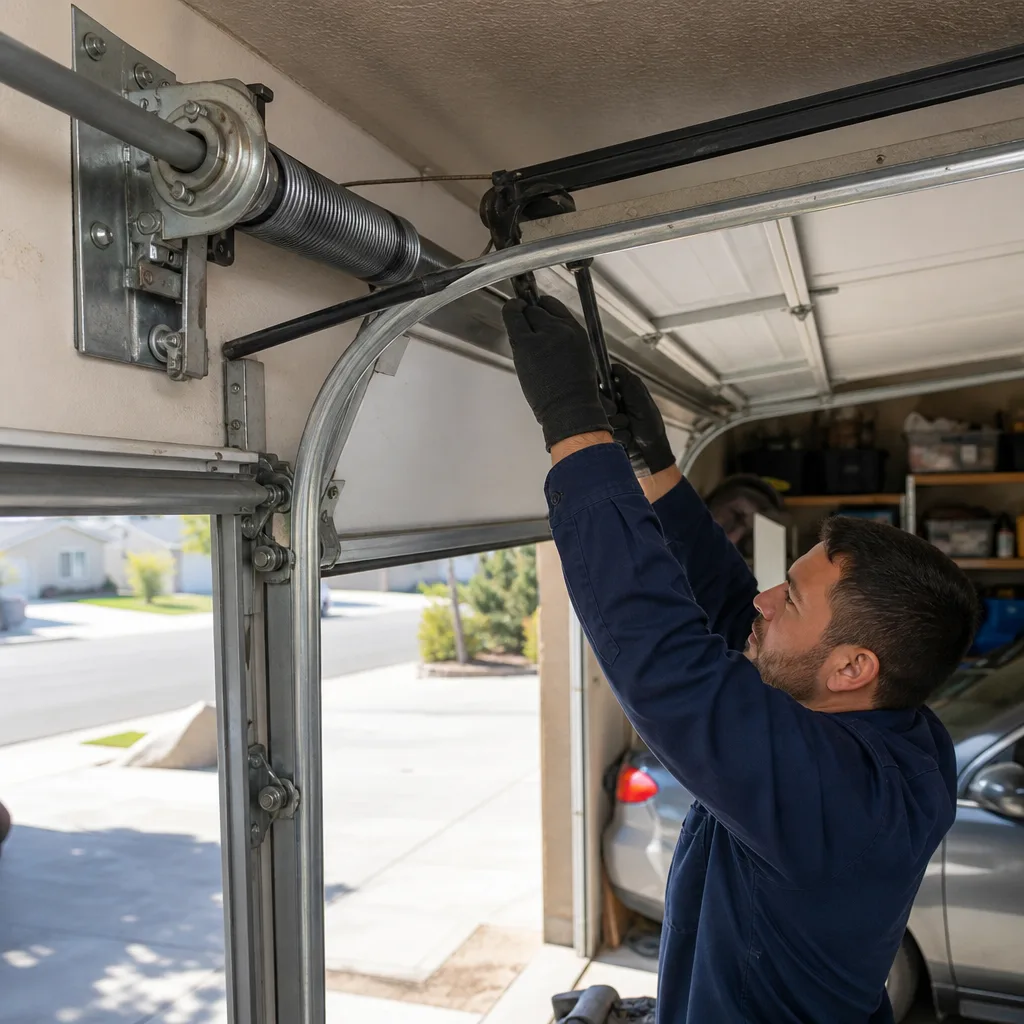
- Spring torque measurement. Torsion springs are calibrated to a specific torque value based on the door’s weight and size. A technician weighs the door, calculates the correct torque, and adjusts the spring with a winding bar. If the torque is wrong, the opener motor works harder than it should and the door becomes dangerous. This is not a DIY task: torsion springs under tension can cause severe injury if mishandled.
- Track alignment with a level, not a glance. A track that looks aligned to the eye can be off by 1/8 inch, which is enough to create uneven roller wear and increase opener strain. A technician uses a laser level or machinist’s level to check both tracks along their full length.
- Cable tension balance. The two lift cables must carry equal tension. Unequal tension means the door rises unevenly, which causes the rollers to bind and the sections to flex. A technician checks cable tension on both sides and adjusts the drums on the torsion shaft if needed.
- Opener force setting calibration. The opener’s internal force sensor should be set to stop and reverse when the door encounters roughly 20 pounds of resistance. Most homeowner-installed openers are set too high, which means the door will not reverse on an obstruction. A technician tests the setting with a force gauge and recalibrates as needed.
- Opener board and gear inspection. On chain-drive openers, the drive gear is a consumable part. Techs inspect gear teeth for wear, check the sprocket for play, verify motor capacitor condition, and test the logic board for any heat-related degradation. Menifee’s summer heat is hard on opener electronics, especially in uninsulated garages.
- Complete hardware torque. Every accessible bolt, nut, and lag screw gets checked with a calibrated torque wrench. Homeowners can check for looseness, but they cannot confirm correct torque without the right tools.
An annual tune-up is the single most effective preventive measure for extending door and opener lifespan in Menifee. We recommend scheduling it in September or October, before wind season adds stress to the system.
For opener-specific problems, see our guide on garage door opener repair in Menifee. If your door is over 15 years old and the tune-up reveals structural issues, read about garage door installation in Menifee to understand when replacement makes more financial sense than repeated repairs.
Common Mistakes to Avoid
- Lubricating once a year on a “national average” schedule. Menifee’s heat breaks down lubricant in roughly half the time of a coastal climate. If you follow a generic annual schedule, your door runs dry for months every summer.
- Using WD-40 instead of a real lubricant. WD-40 strips lubrication rather than adding it. Replacing actual lubricant with WD-40 accelerates wear on every moving part it touches.
- Greasing the tracks. Tracks are designed for rollers, not lubricant. Grease in tracks collects Menifee’s construction dust and creates an abrasive slurry that destroys roller bearings in two or three seasons.
- Ignoring a noisy door. A squeak, rattle, or grinding sound is not “just the way the door sounds.” It is a moving component failing in slow motion. By the time the noise stops, the component has usually failed entirely.
- Adjusting torsion springs without proper tools and training. Torsion springs store enough mechanical energy to crush bone or worse. If the door is out of balance, the spring needs professional attention. There is no safe shortcut.
- Disabling the auto-reverse sensors to “fix” a door that will not close. The sensors are not an annoyance. If the door reverses or refuses to close, something is obstructing the beam, the sensors are misaligned, or a wire is loose. Bypassing them creates a child-safety hazard and a liability risk.
- Skipping the wind-season prep until after the first Santa Ana event. By the time winds hit, the damage has usually already been done. The prep needs to be completed before the season starts, not after the first gust damages a track or seal.
When to Call a Professional
Some maintenance tasks are yours. Some are not. Here is the line: if a task involves high-tension springs, cables under load, track removal, or opener force calibration, it belongs to a trained technician. Call for professional service if you notice any of the following: the door is out of balance when you release the emergency cord, you see frayed cable strands, the torsion spring has a visible gap in the coil, the door reversed in a way that felt abrupt or unsafe during the monthly test, or the opener is making a grinding noise that no amount of lubrication resolves.
Garage Door Service Menifee offers free estimates in Menifee. Call (833) 593-4019, and we’ll send a technician to assess the problem and give you a written price before any work begins. You will know the exact cost before we pick up a tool.
Frequently Asked Questions
A professional garage door tune-up in Menifee typically costs between $89 and $150 depending on the door type, opener age, and whether replacement parts are needed. The tune-up inspection itself is a fixed fee; any parts recommended come with a separate price quoted before work begins. Call (833) 593-4019 for an exact quote based on your door and opener.
In Menifee, you should lubricate your garage door every 3 months because sustained summer temperatures above 95°F cause standard lubricants to break down faster through thermal oxidation. The most important lubrication points are the roller bearings, hinges, spring coil, and opener rail.
Yes, Santa Ana winds can damage a garage door by applying sustained lateral pressure against the door panel, which stresses track alignment, loosens mounting hardware, and increases the amperage draw on the opener motor. Doors with existing track or spring wear are most vulnerable during high-gust events, especially in exposed areas of Menifee east of the 215.
Use a high-temperature white lithium grease or a synthetic spray lubricant with PTFE, rated for service temperatures of at least 120°F. Avoid WD-40, generic petroleum grease, and penetrating oils, because these products break down or evaporate quickly in Menifee’s summer heat.
The primary sign is a door that drops or rises when you release the emergency cord and lift it manually to waist height: a properly balanced door should stay in place. Other signs include a visible gap in the torsion spring coil, a loose cable on the drum, or the opener struggling and making a heavy grinding sound during operation. Spring replacement is a professional job: torsion springs under tension can cause serious injury if mishandled.
No. The price is quoted and agreed upon before any work starts. If the technician finds additional problems during the inspection, those repairs are discussed with you and priced as separate line items before proceeding. You approve everything in writing before work begins. Call (833) 593-4019 to schedule a free estimate in Menifee.
The Bottom Line
Garage door maintenance in Menifee is not complicated, but it is specific. The heat, wind, and dust that define this region demand a schedule that differs from the generic advice found in national guides. Monthly checks catch problems early. Quarterly lubrication with high-temperature products keeps moving parts running through the summer. Pre-wind-season prep protects the door during Santa Ana events. And an annual professional tune-up catches what no checklist can. Ten minutes a month and 45 minutes a quarter is a small investment compared to a broken spring at 7 a.m. on a workday. Do the routine, and your door will outlast most doors in Menifee. Skip it, and you will be calling us sooner than you expected. Either way, we’re at (833) 593-4019 when you need us.
Written by the team at Garage Door Service Menifee, serving Menifee since 2012. For more on what we do, visit our Garage Door Service Menifee home page.
See the difference
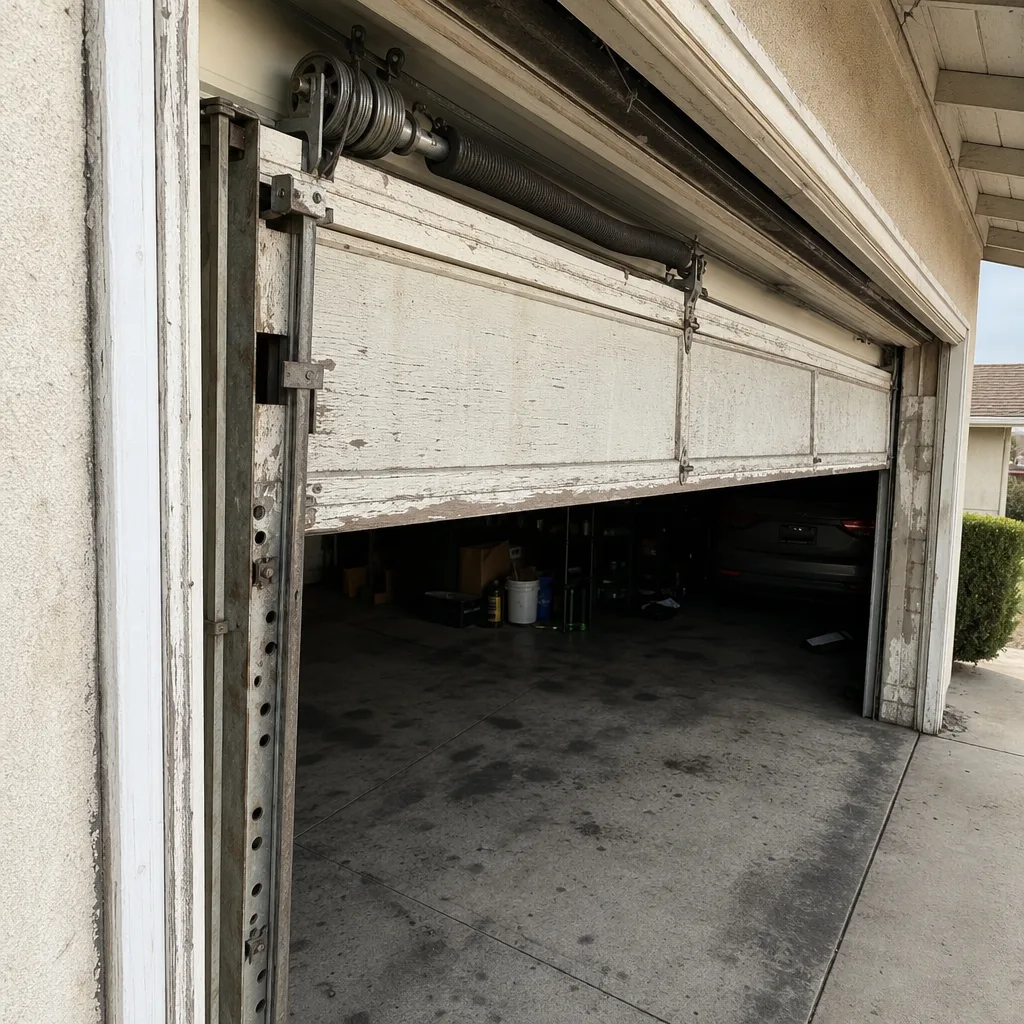 Before
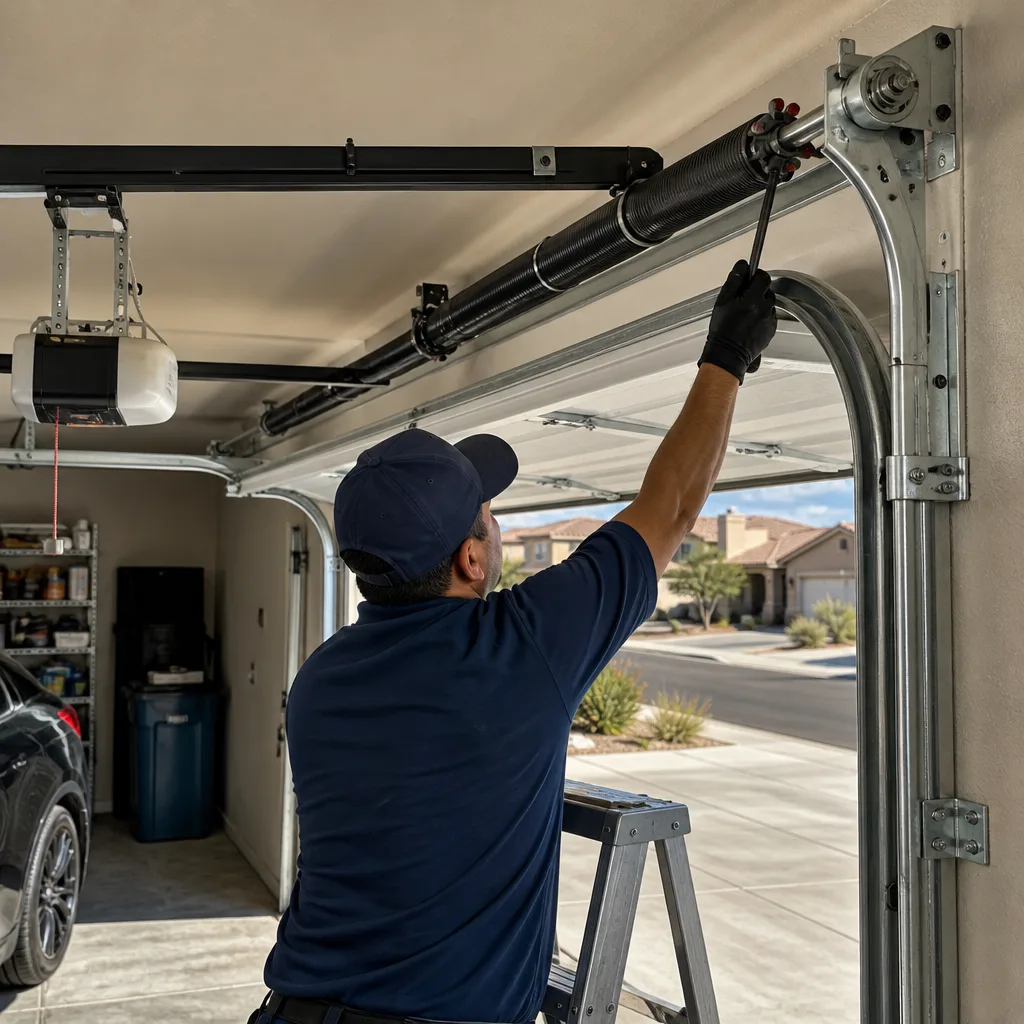 After
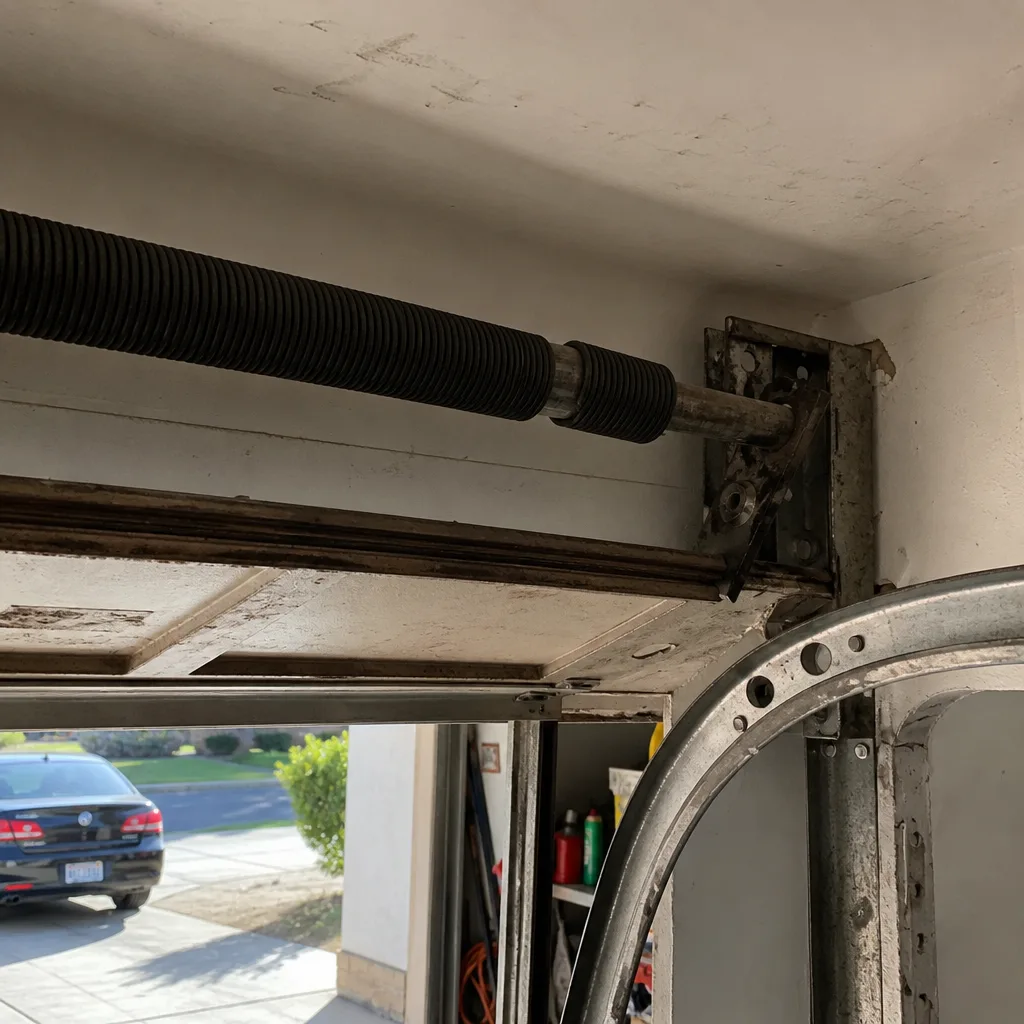 Before
 After
 Before
 After